

Powder mixing and accompanying procedures
The article explains that powder mixing—especially with fine or nanodispersed powders—is a complex process where concurrent effects such as deagglomeration, agglomeration, wetting, drying, coating, comminution, reactions, and segregation must be controlled via mixer design and process parameters. amixon develops vertical precision mixers, vacuum mixing dryers, and synthesis reactors for industries including pharma, food, fine chemicals, plastics, metallurgy, and biotech, enabling gentle, hygienic, and reproducible results. Its KoneSlid mixer provides rapid, near-complete, gas-tight discharge and can act as a dosing device, while a technical center with 30+ units offers trials to optimize parameters like particle size, temperature, liquid addition, flow, and timing.
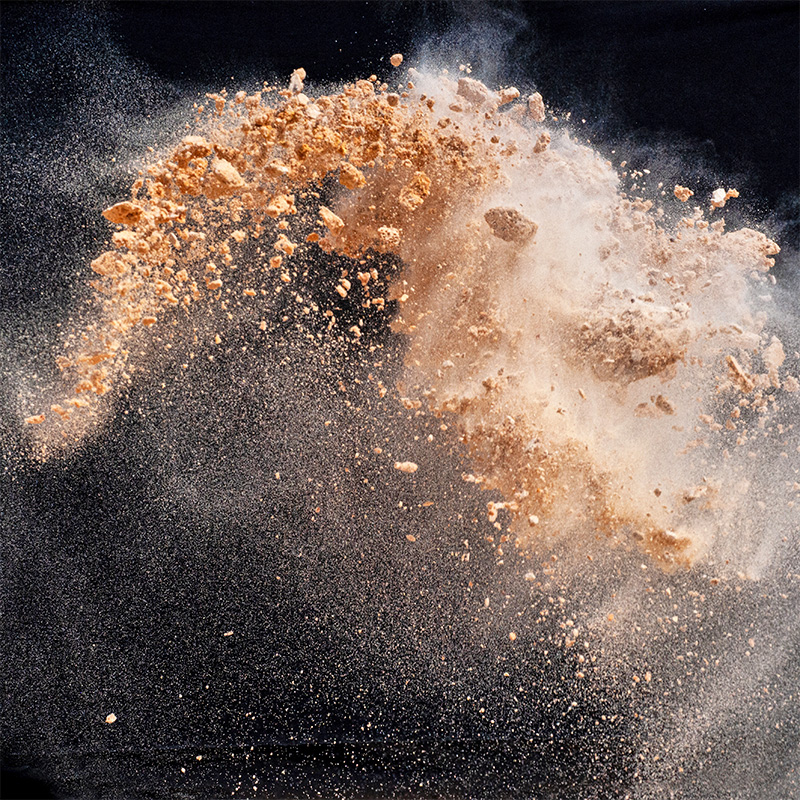
Depending on their fineness, dusts can remain suspended in the air indefinitely. This applies in particular to many nanodispersed powders.
The basic process operation of ‘powder mixing’ is always associated with various secondary or accompanying effects. These become clearly visible upon microscopic examination of the individual particles in the mixture. Often, certain accompanying effects are expressly desired. In such cases, the mixing apparatus, mixing elements and process control must be carefully coordinated.
If, on the other hand, side effects are undesirable, a particularly gentle mixing profile is required.
The same accompanying operations are sometimes referred to by different names in various industries, although the underlying basic physical operation is identical. The design and configuration of the mixing system, as well as the selected operating mode, determine the nature and intensity of the side effects that occur.
amixon® develops and manufactures a wide range of vertical precision powder mixers for almost all sectors of bulk material processing. Through the targeted design of the mixing chamber geometry, mixing tool and process control, desired side effects can be reproducibly generated or reduced to a minimum.
The amixon® portfolio comprises a unique range of precision mixers, vacuum mixing dryers and synthesis reactors. More than 30 different amixon® units are available in the technical centre for trials with actual products. As a result, our process equipment achieves outstanding mixing results and high process reliability across all industries – worldwide.
Basic process powder mixing
The mixing of powders is one of the oldest fundamental processes in the history of engineering. On an industrial scale, however, there is a tendency to regard powder mixing as a supposedly trivial process. On closer inspection, however, it becomes apparent that numerous accompanying effects occur simultaneously during the mixing process, and in some cases even work against one another. Typical process phenomena that overlap during powder mixing include:
- deagglomeration (breaking up agglomerates to release primary particles)
- spherisation (rounding of angular particle surfaces)
- grinding/ comminution (increase in surface area through particle size reduction)
- wetting (application of liquids to solid surfaces)
- encapsulation (coating of carrier particles with functional layers)
- segrgation (separation based on different particle size fractions)
- agglomeration/ pelletation (targeted enlargement of particles)
- drying (removal of the liquid phase during the mixing process, under vacuum if necessary)
- reaction (chemical transformation of reactive components in the mixer)
- crystallisation / chemical precipitation (formation of a solid from a liquid phase)
The process objectives shown on the info cube have different priorities depending on the industry:
- In the pharmaceutical industry, the focus is on active ingredient synthesis, gentle solid processing and reliable vacuum drying. In
- solid-dose formulation, controlled comminution, deagglomeration and defined agglomeration are crucial for flowability, dosing accuracy and tablettability. In the
- food industry, flexibility, hygienic design and cleanability are paramount – whilst ensuring particularly gentle mixing of sensitive formulations. In the
- fine chemicals and plastics industries, spatially and temporally controlled reaction management within the mixer is of central importance. In
- powder metallurgy, nanoparticles frequently serve as functional coating agents and must completely and homogeneously coat the carrier or active ingredient particles. In
- biotechnology, the gentle mixing of large batches is crucial. At the same time, precise temperature control is required for varying material consistencies, and extremely high hygiene standards must be maintained.
Some processes are batch-based, others continuous. However, all mixer types from the amixon® product range are used across all industries.
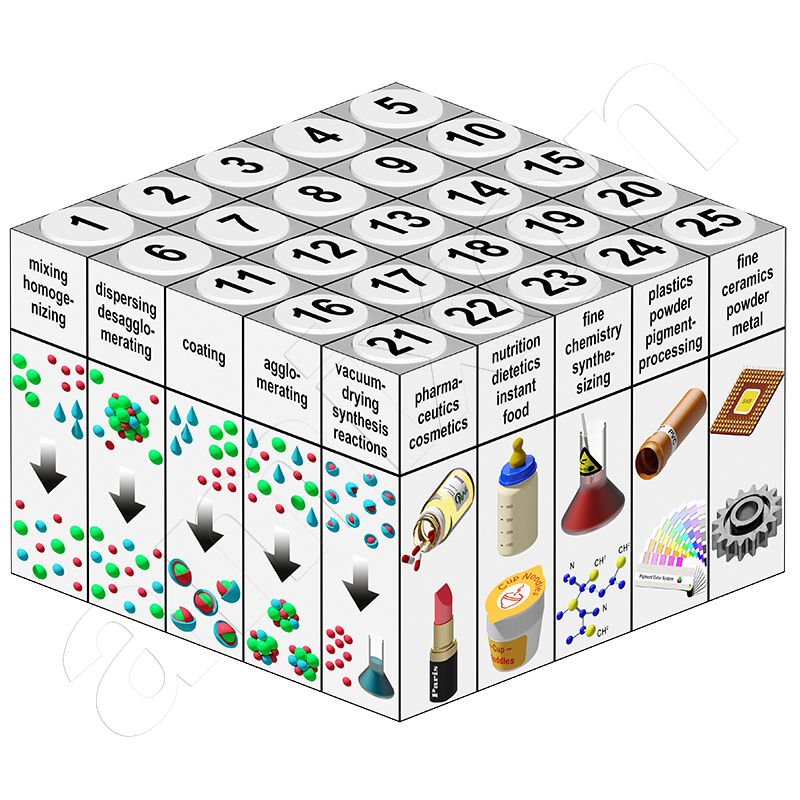
amixon® Info Cube
The mixing of powders is one of the oldest fundamental processes in the history of engineering. On an industrial scale, however, there is a tendency to regard powder mixing as a supposedly trivial process. On closer inspection, however, it becomes apparent that numerous accompanying effects occur simultaneously during the mixing process, and in some cases even work against one another. Typical process phenomena that overlap during powder mixing include:
- deagglomeration (breaking up agglomerates to release primary particles)
- spherisation (rounding of angular particle surfaces)
- grinding/ comminution (increase in surface area through particle size reduction)
- wetting (application of liquids to solid surfaces)
- encapsulation (coating of carrier particles with functional layers)
- segrgation (separation based on different particle size fractions)
- agglomeration/ pelletation (targeted enlargement of particles)
- drying (removal of the liquid phase during the mixing process, under vacuum if necessary)
- reaction (chemical transformation of reactive components in the mixer)
- crystallisation / chemical precipitation (formation of a solid from a liquid phase)
The process objectives shown on the info cube have different priorities depending on the industry:
- In the pharmaceutical industry, the focus is on active ingredient synthesis, gentle solid processing and reliable vacuum drying. In
- solid-dose formulation, controlled comminution, deagglomeration and defined agglomeration are crucial for flowability, dosing accuracy and tablettability. In the
- food industry, flexibility, hygienic design and cleanability are paramount – whilst ensuring particularly gentle mixing of sensitive formulations. In the
- fine chemicals and plastics industries, spatially and temporally controlled reaction management within the mixer is of central importance. In
- powder metallurgy, nanoparticles frequently serve as functional coating agents and must completely and homogeneously coat the carrier or active ingredient particles. In
- biotechnology, the gentle mixing of large batches is crucial. At the same time, precise temperature control is required for varying material consistencies, and extremely high hygiene standards must be maintained.
Some processes are batch-based, others continuous. However, all mixer types from the amixon® product range are used across all industries.
amixon® Info Cube
Process parameters and preparation steps
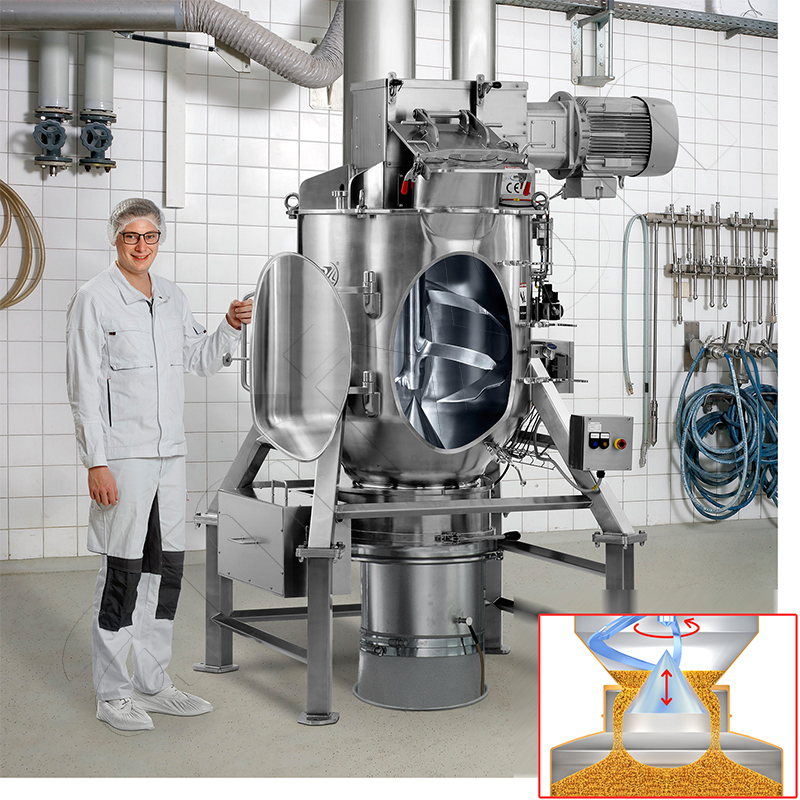
KoneSlid® mixer from amixon®.
At the end of a mixing process, the result should be a homogeneous powder mixture that meets the expectations. With the help of the process parameters named below, the targeted processing step can be navigated:
- Material composition/recipe
- promoting or avoiding particulate interactions (chemical, physical)
- particle sizes
- temperature
- presence of liquid substances
- method of liquid injection
- pressure level
- type of flow generation
- sequence and timing for the addition of ingredients
- turbulence intensity of mixing
- mixing time
- .... many more
KoneSlid® mixer from amixon®.
At the end of a mixing process, the result should be a homogeneous powder mixture that meets the expectations. With the help of the process parameters named below, the targeted processing step can be navigated:
- Material composition/recipe
- promoting or avoiding particulate interactions (chemical, physical)
- particle sizes
- temperature
- presence of liquid substances
- method of liquid injection
- pressure level
- type of flow generation
- sequence and timing for the addition of ingredients
- turbulence intensity of mixing
- mixing time
- .... many more
KoneSlid® Mixer
Powder blending and accompanying processes are important topics in the production of pharmaceuticals, nutrients, active chemical ingredients and high-performance materials. With trials in the amixon® technical center, we make valuable contributions to your problem solutions.
amixon® can help you save time and money. Forty years ago we started to manufacture vertical spiral mixers. Since then, we have established amixon® helical mixers with vertical mixer shafts in almost every industry. amixon® is a trendsetter in this sector. In addition, amixon® process machines are trendsetters in the following areas
- ideal mixing qualities
- gentle mixing
- residue-free emptying
- trend-setting sanitary design
Powder blending and accompanying processes are important topics in the production of pharmaceuticals, nutrients, active chemical ingredients and high-performance materials. With trials in the amixon® technical center, we make valuable contributions to your problem solutions.
amixon® can help you save time and money. Forty years ago we started to manufacture vertical spiral mixers. Since then, we have established amixon® helical mixers with vertical mixer shafts in almost every industry. amixon® is a trendsetter in this sector. In addition, amixon® process machines are trendsetters in the following areas
- ideal mixing qualities
- gentle mixing
- residue-free emptying
- trend-setting sanitary design
Discharge takes only a few seconds
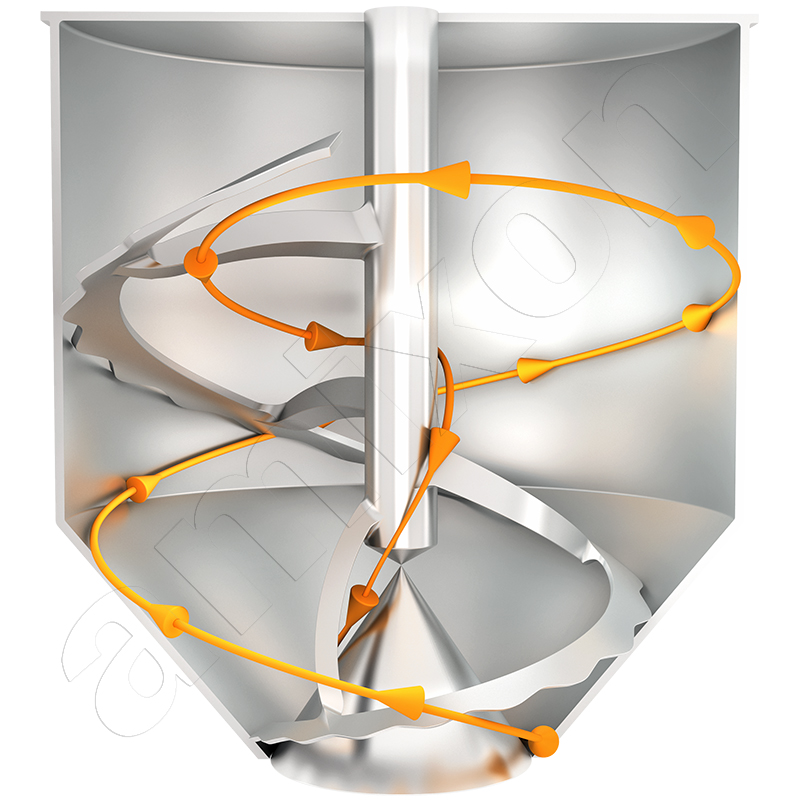
Ideal mixing qualities are achieved very quickly in the KoneSlid® mixer. Then the conically shaped closing element moves downwards. Free-flowing mixing goods are completely discharged within a few seconds. The degree of discharge is almost 100%.
This discharge fitting is permanently gas-tight. It can also be used as a dosing device. The tests at the amixon test center explain many details better than a written text.
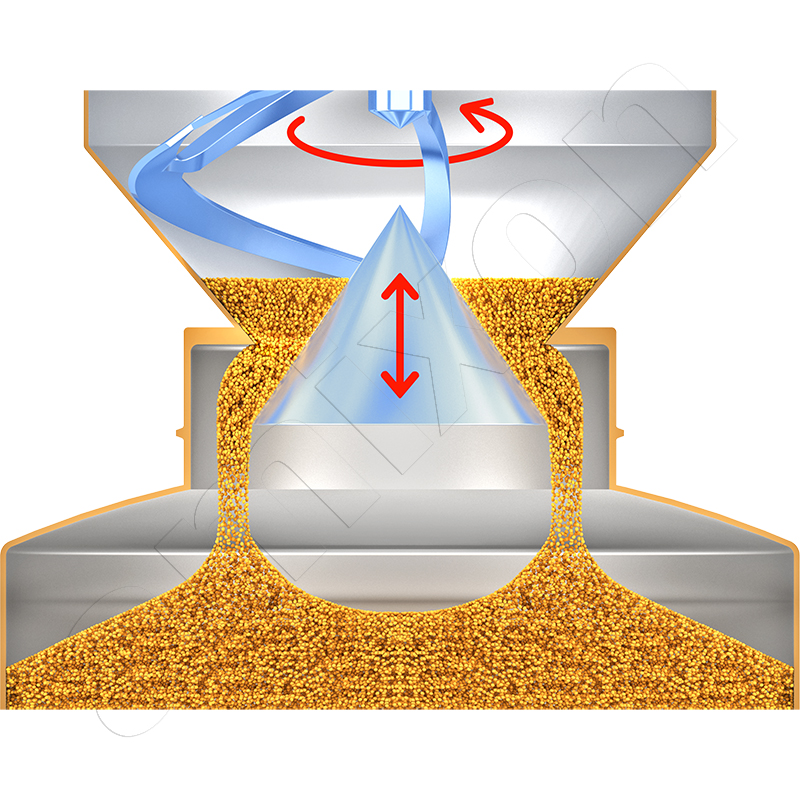
Ideal mixing qualities are achieved very quickly in the KoneSlid® mixer. Then the conically shaped closing element moves downwards. Free-flowing mixing goods are completely discharged within a few seconds. The degree of discharge is almost 100%.
This discharge fitting is permanently gas-tight. It can also be used as a dosing device. The tests at the amixon test center explain many details better than a written text.
© Copyright by amixon GmbH