
Liquid Addition, Wetting and Coating:
Uniformly Incorporating Oils, Fats and Binders
Oils, Fats and Binders
Uniformly Incorporating Them into Powders
Oils, Fats and Binders
Incorporated Uniformly
Wetting, Wetting Processes, Coating,
Build-Up Granulation and Degree of Coating in the Mixing Process.
Summary
In liquid addition processes, oils, fats, binders or active ingredient solutions are incorporated into a dry powder. It is essential for the liquid to contact as many particle surfaces as possible upon entering the mixer; otherwise, lumps may form. Depending on the liquid content and the desired end product, the result may be a free-flowing powder, a continuous coating or a granulate.
Insights, FAQs and Topics Related to Liquid Addition, Wetting and Coating
In liquid addition processes, oils, fats, binders or active ingredient solutions are incorporated into a dry powder. The moment the liquid enters the mixer is critical: if it contacts only a small number of particles, wetting will be uneven and lumps will form, which must subsequently be broken down using high energy input. If the powder is wetted evenly across a large surface area, the process will produce a free-flowing powder, a coating or a granulate, depending on the liquid content.
Key factors include the point of liquid addition and atomization of the liquid jet, the viscosity and temperature of the additive, and the choice of wetting method. When adding fats, temperature control is also important because molten fat solidifies immediately upon contact with cold powder. For controlled build-up granulation, binder addition and residence time during the granulation process determine the particle size, while high-speed cutting tools disperse any lumps. The degree of coating indicates how completely the carrier particle is encapsulated.
Below, you will find answers to the most frequently asked questions about liquid addition, wetting and coating, an overview of suitable machine concepts—from the vertical mixer and conical mixer dryer to the ring-layer mix-pelletizer—as well as detailed explanations of the key technical terms.

FAQ - Liquid Addition, Wetting, and Coating

A continuous detergent mixing process with liquid addition is controlled stably when a gravimetric main stream forms the reference variable and all solid and liquid streams are tracked via fixed, monitored recipe ratios. The liquid should be added via a fast, mass-flow-controlled dosing loop; a superordinate ratio controller couples its setpoint to the actual solids throughput.
The amixon® AMK stabilises a continuous mixing process through synchronised gravimetric dosing, controlled fill-level guidance and a defined start-up and shut-down procedure. The mixer starts at about half the fill quantity; the discharge component opens at approximately 80% fill level. The fill level is then kept constant during production operation.
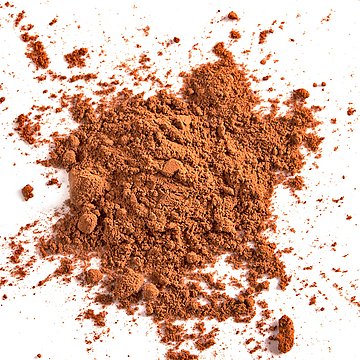
Cleanability with cocoa, fat and other sticky powder recipes starts with a hygienic, accessible and, as far as possible, fully dischargeable design. Smooth, flush surfaces, minimised deposit points, readily accessible seals, suitable inspection openings and a fully drainable design are key prerequisites.
amixon® supports cleanability with sticky powders through an accessible, hygienically designable mixer geometry, Clever-Cut® inspection doors with OmgaSeal® sealing, functions to reduce residual quantities, and the automated WaterDragon® system. This uses programmable target-jet washing lances that extend into the mixing chamber and rotate for wet cleaning.
Mixing quality and particle integrity can be ensured simultaneously when the mixing process is matched to the granulate's breaking strength. For sensitive press granulates, gentle mixing principles such as container, tumble, V, double-cone or cone-screw mixers are especially suitable. Slow-running convective mixing systems can also be suitable, provided speed, fill level, mixing time and feed conditions do not overly stress the particles.
amixon® vertical mixers with SinConvex® mixing tools can be designed for gentle homogenisation of sensitive granulates at low circumferential speeds. The manufacturer states an adjustable range of approximately 0.8 to 3.5 m/s for VM and HM mixers. The actual particle stress, however, additionally depends on mixing duration, fill level, tool geometry, dosing and discharge.
Viscous binders can most reliably be dosed via a temperature-controlled, as short as possible positive-displacement pump–line–nozzle chain. Low-dead-space valves, self-draining piping, suitable atomisation and a validatable cleaning design are more important than any single component. The design must jointly consider the binder, viscosity, temperature, dosing quantity, product movement and hygiene requirements.
amixon® batch mixers can be equipped with liquid addition lances and two-fluid nozzles for dosing and introducing viscous binders. A temperature-controlled design can help to keep the binder's viscosity within the processable range. Introduction into the moving product zone and the use of a cutting rotor support uniform wetting and can limit local over-wetting.
For the combination of mixing, liquid addition and granulation, high-shear mixer-granulators, fluid-bed plants, continuous twin-screw granulators and certain mechanically fluidised mixers are especially suitable. High-shear systems often produce compact granulates, fluid beds can combine granulating and drying, and twin screws are suitable for continuous processes. The right choice depends on the desired granulate structure, product behaviour, liquid addition, cleaning, safety and trial verification with the original product.
amixon® is suitable for precise binder addition, wetting, build-up agglomeration and granulation in batch or continuous processes. Whether a complete one-pot process including drying makes sense depends on the product and batch size. Pilot-plant trials with the original product provide the basis for a well-founded apparatus and process selection.
For continuous detergent processes with liquid additives, ring-layer mixers or ring-layer granulators, ploughshare mixers and twin-shaft paddle mixers are especially suitable. Ring-layer systems are suitable when intensive wetting or agglomeration is desired. Ploughshare mixers offer a flexible solution for the continuous wetting of powders. Twin-shaft paddle mixers are advantageous when a uniform and, at the same time, gentle incorporation of sensitive granulates or additives is required.
The amixon® continuous mixer AMK enables the continuous processing of solids with controlled liquid addition. Its start-up and shut-down concept works with an initially closed discharge, synchronised gravimetric dosing streams and a controlled fill level. According to amixon®, the discharge opens at a fill level of around 80%; the fill level is then kept constant during production operation.
There is no universally optimal mixer for incorporating flavours, prebiotics, vitamins and trace elements into milk powder. Twin-shaft paddle mixers, ploughshare mixers and, in particular, vertical twin-shaft mixers are suitable solutions when short mixing times, high homogeneity and, where applicable, controlled addition of liquid flavours are required. For particularly sensitive, agglomerated milk powders, cone-screw or container free-fall mixers can be advantageous when predominantly dry components are processed.
amixon® offers three graduated solutions for the gentle incorporation of sensitive ingredients into milk powder: the KoneSlid® mixer for smaller to medium batches and sensitive agglomerates, the vertical twin-shaft mixer for large batches, and the AMK for continuous processes. The choice depends on batch size, throughput, recipe, product structure, dosing quantities and the required hygiene concept.
For slips and low- to medium-viscosity ceramic suspensions, rotor-stator mixers are suitable for rapid wetting and breaking up soft agglomerates. Where a finer and more stable dispersion is required, stirred bead mills, pearl mills or attritors are usually the more effective solution. Grinding-media abrasion, temperature rise and possible changes to the primary particles must be taken into account.
amixon® mixing systems can gently homogenise ceramic powders and, where needed, selectively de-agglomerate them with separately operated cutting rotors. The main mixing tool provides three-dimensional product movement, while cutting rotors locally introduce shear and impact energy. This allows the intensity to be matched to the task: from preserving sensitive press granulates to breaking up soft or medium-strength agglomerates.
A defined particle-size distribution is controlled above all by the liquid-to-solid ratio, the properties and distribution of the binder, droplet size and spray rate, mechanical energy input, residence time, and temperature and drying conditions. The liquid-to-solid ratio is often the dominant control variable in wet agglomeration: too little liquid favours fines and weak agglomerates; too much liquid promotes oversize particles, lump formation and broad distributions.
For the targeted control of particle-size distribution during agglomeration, amixon® relies on batch-wise build-up granulation in the vertical and cone mixing systems VM, HM and AM, as well as in the mixing dryers AMT and VMT. The most important control variables are the liquid or binder addition (quantity, concentration, addition rate and spray pattern), tool circumferential speed, mixing time or batch duration, fill level, and, where needed, temperature control and post-mixing time. Since every batch is fully recorded and evaluated, the particle-size distribution can be specifically readjusted over several addition and mixing phases. For applications that explicitly require continuous operation, amixon® additionally offers the ring-layer mixing granulator RMG as a separate product line.