

Using a vacuum dryer to toast flour and deactivate enzymes
Amixon’s vacuum mixing reactors thermally treat, sterilize, dry, and cool flours and other powders in a single closed system, deactivating enzymes, eliminating spores/microbes, and partially gelatinizing starch to improve instant properties, flow, and shelf life. The process typically uses steam at about 130°C and ~3 bar for ~20 minutes, followed by vacuum drying and cooling, enabling applications from long-life baked goods and dressings to pharmaceutical excipients and tablet fillers. The machines deliver high, reproducible mixing quality, hygiene, and traceability, handle a wide range of flours and batch sizes without compaction, meet EHEDG/GMP/FDA standards, and scale from 10-liter trials to multi-cubic-meter production, with pilot testing support.
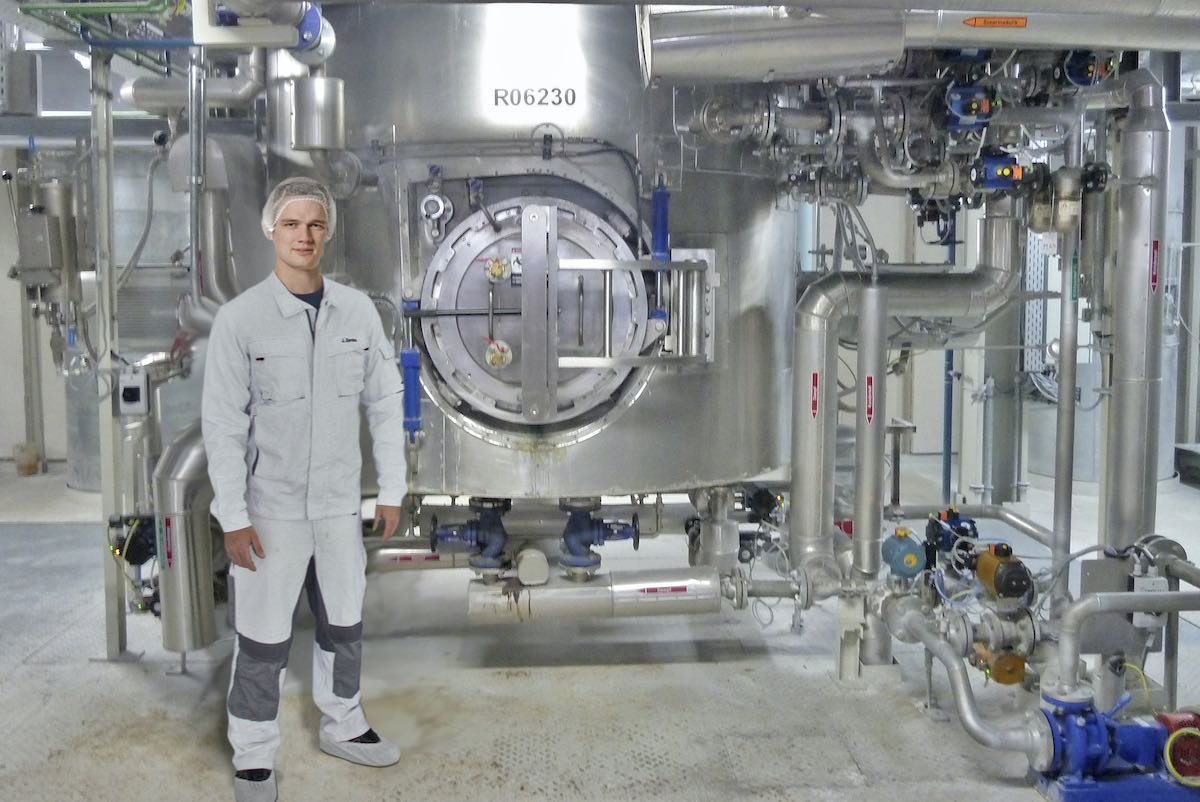
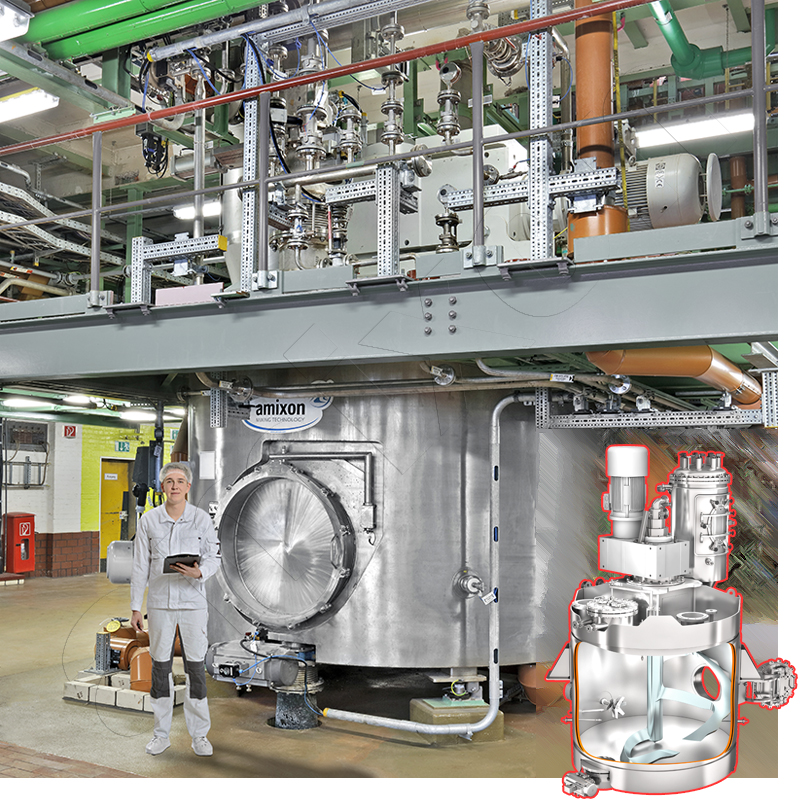
amixon® reactor (6m³) with large manhole. Door closure with no dead space, with hydraulic bayonet lock.
The amixon mixers and sterile reactors offer a wide range of applications. They can thermally treat flours or other organic powders and mix and dry them under vacuum.
They can process the sterile powders obtained into specialty baking agents.
You can further process the masses obtained into tablet masses. Their range of applications in the solid-liquids industry is particularly wide.
Some reasons for this are:
- FLEXIBILITY: In amixon® mixers and reactors, the filling levels can vary greatly without sacrificing efficiency.
- QUALITY/REPRODUCIBILITY: amixon® machines achieve ideal mixing qualities that cannot be improved in practice.
- PROCESS RELIABILITY: amixon® machines meet the most stringent hygienic requirements.
- TRACEABILITY: amixon® machines can be emptied very thoroughly. This helps to ensure contamination-free production.
Sterilisation and processing of cereal flour as a pharmaceutical carrier substance
Cereal flours and derivatives are also used in the production of carrier substances for pharmaceuticals. The flours are heated under vapour pressure in the amixon® mixing reactor. Sterilisation takes place at 130 °C. The system pressure is increased to approx. 3 bar absolute. The residence time is approx. 20 minutes. The vapour is then blown off. This is followed by vacuum drying and cooling.
The treated flour is then free from spores and microorganisms. The starch contained in the flour is partially gelatinised. The resulting mass can be used as a filler for tablet masses. The amixon® mixers are also capable of homogeneously mixing in active medical ingredients. The mixtures produced in this way are generally easy to tablet.
The amixon® team will be happy to support you in extrapolating the data. amixon® mainly carries out its tests on a 200-litre scale. Industrial plants can be up to 100 times larger.
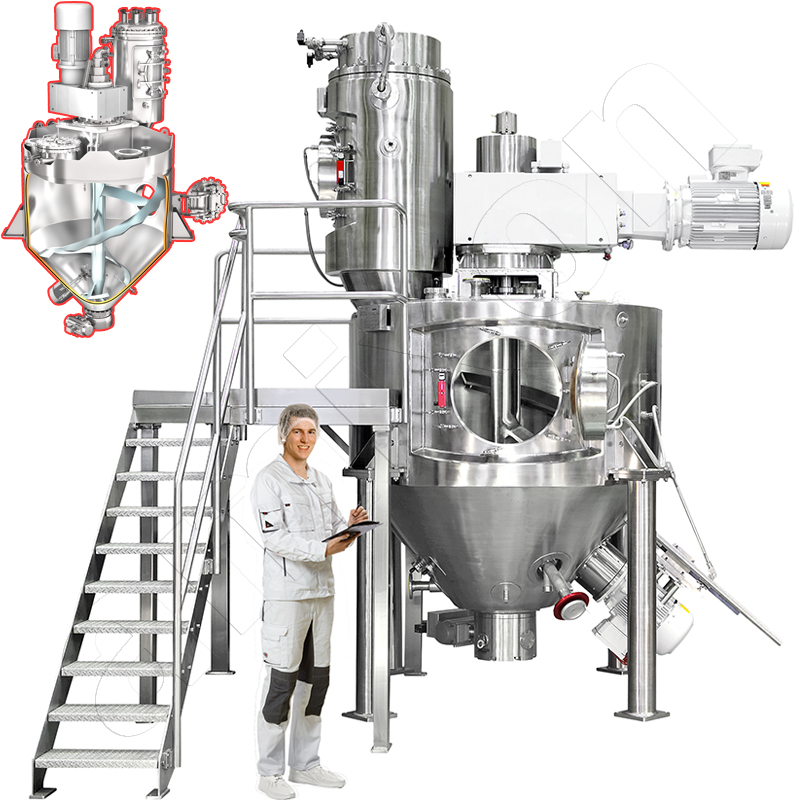
amixon® sterile reactor for 3 m³ batches.
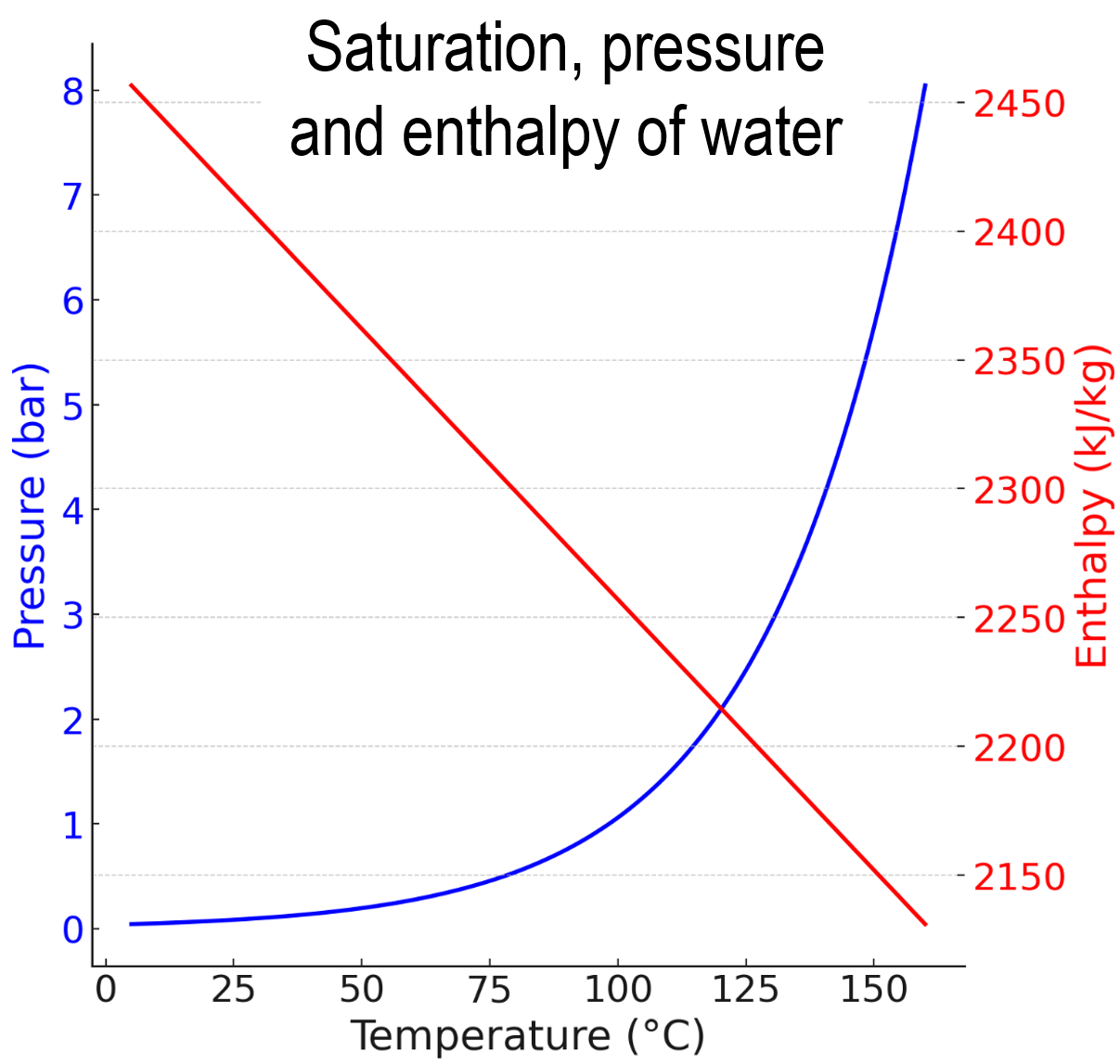
Energy content of the water vapour in the reactor.
Cereal flours and derivatives are also used in the production of carrier substances for pharmaceuticals. The flours are heated under vapour pressure in the amixon® mixing reactor. Sterilisation takes place at 130 °C. The system pressure is increased to approx. 3 bar absolute. The residence time is approx. 20 minutes. The vapour is then blown off. This is followed by vacuum drying and cooling.
The treated flour is then free from spores and microorganisms. The starch contained in the flour is partially gelatinised. The resulting mass can be used as a filler for tablet masses. The amixon® mixers are also capable of homogeneously mixing in active medical ingredients. The mixtures produced in this way are generally easy to tablet.
The amixon® team will be happy to support you in extrapolating the data. amixon® mainly carries out its tests on a 200-litre scale. Industrial plants can be up to 100 times larger.
amixon® sterile reactor for 3 m³ batches.
Energy content of the water vapour in the reactor.
Thermally treated cereal flour has improved instant properties
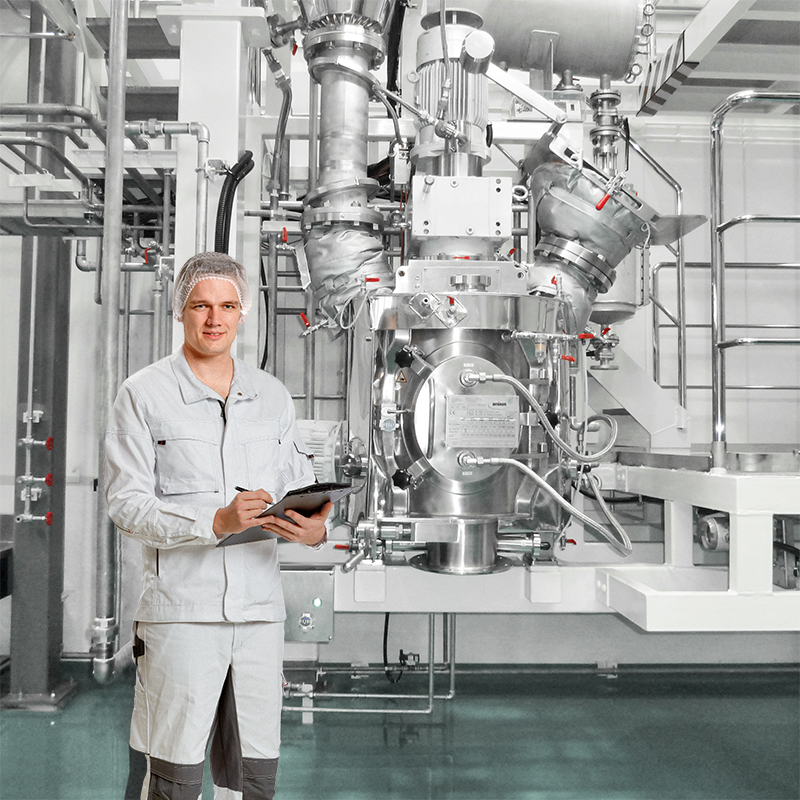
amixon® test system at the test centre in Japan.
amixon® sterile reactor for 12 m³ batches.
Grain flours can be thermally treated in various ways for the bakery industry. This changes the starch structure and inactivates enzymes. Doughs made from denatured flours have altered baking properties. In addition, the shelf life of so-called long-life baked goods can be improved. The same applies to the shelf life of frozen doughs.
In some companies, the thermal treatment of cereal flour is also referred to as toasting, as the flour can take on a slightly roasted flavour.
Thermally treated flour generally has good flow and pouring properties. It wets well with both water and oils.
Hydrothermally treated flour is a natural stabiliser and binding agent that is used in the production of dressings, sauces and creams. It is used in numerous catering and confectionery products.
amixon® test system at the test centre in Japan.
amixon® sterile reactor for 12 m³ batches.
Grain flours can be thermally treated in various ways for the bakery industry. This changes the starch structure and inactivates enzymes. Doughs made from denatured flours have altered baking properties. In addition, the shelf life of so-called long-life baked goods can be improved. The same applies to the shelf life of frozen doughs.
In some companies, the thermal treatment of cereal flour is also referred to as toasting, as the flour can take on a slightly roasted flavour.
Thermally treated flour generally has good flow and pouring properties. It wets well with both water and oils.
Hydrothermally treated flour is a natural stabiliser and binding agent that is used in the production of dressings, sauces and creams. It is used in numerous catering and confectionery products.
The amixon® process: integration rather than separation
Conventional flour processing methods involve separate process stages: thermal treatment, drying and cooling take place in separate units – with the associated transfer points, risks of recontamination and cleaning requirements. amixon® integrates all these stages into a single system.
Inside the reactor, water vapour condenses directly onto the surface of the flour particles. This ensures that thermal energy is transferred highly efficiently and evenly – a decisive advantage over dry convection heat. The simultaneous heating of all machine parts in contact with the product prevents steam from condensing uncontrollably on the walls. Following the thermal treatment, vacuum drying and cooling take place in the same vessel – without product transfer and without any risk of contamination.
For pharmaceutical excipients made from cereal flour, the process is carried out at 130 °C under an absolute pressure of approximately 3 bar for a residence time of around 20 minutes; the product is then spore-free and microbiologically safe.
Conventional flour processing methods involve separate process stages: thermal treatment, drying and cooling take place in separate units – with the associated transfer points, risks of recontamination and cleaning requirements. amixon® integrates all these stages into a single system.
Inside the reactor, water vapour condenses directly onto the surface of the flour particles. This ensures that thermal energy is transferred highly efficiently and evenly – a decisive advantage over dry convection heat. The simultaneous heating of all machine parts in contact with the product prevents steam from condensing uncontrollably on the walls. Following the thermal treatment, vacuum drying and cooling take place in the same vessel – without product transfer and without any risk of contamination.
For pharmaceutical excipients made from cereal flour, the process is carried out at 130 °C under an absolute pressure of approximately 3 bar for a residence time of around 20 minutes; the product is then spore-free and microbiologically safe.
Precision meets flexibility
A key advantage of the batch process in the amixon® reactor is its adaptability: the process temperature, residence time, rotation speed of the mixing tools and vacuum level can all be individually tailored to the powder characteristics of each type of flour. This is particularly relevant for contract manufacturers who process a wide range of products on a single line – from wheat flour to quinoa and oats.
The vertically mounted screw-belt mixing tools, featuring a double-walled design, ensure three-dimensional redistribution without compacting or compressing the material. This means that the particle structure of the treated flour is largely preserved – a quality characteristic that is directly measurable in textural applications. The systems comply with EHEDG, GMP and FDA requirements and can be completely emptied.
A key advantage of the batch process in the amixon® reactor is its adaptability: the process temperature, residence time, rotation speed of the mixing tools and vacuum level can all be individually tailored to the powder characteristics of each type of flour. This is particularly relevant for contract manufacturers who process a wide range of products on a single line – from wheat flour to quinoa and oats.
The vertically mounted screw-belt mixing tools, featuring a double-walled design, ensure three-dimensional redistribution without compacting or compressing the material. This means that the particle structure of the treated flour is largely preserved – a quality characteristic that is directly measurable in textural applications. The systems comply with EHEDG, GMP and FDA requirements and can be completely emptied.
Entry via the Technical College
Before a new type of flour is scaled up to industrial production, amixon® recommends conducting preliminary trials at its in-house pilot plant in Paderborn – starting on a 10-litre scale, scalable to production batches of up to 200 litres and beyond. This step provides certainty regarding process parameters, protects against misguided investments and delivers validatable data for subsequent approval or specification.
Before a new type of flour is scaled up to industrial production, amixon® recommends conducting preliminary trials at its in-house pilot plant in Paderborn – starting on a 10-litre scale, scalable to production batches of up to 200 litres and beyond. This step provides certainty regarding process parameters, protects against misguided investments and delivers validatable data for subsequent approval or specification.
Frequently asked questions about thermal flour treatment
What is meant by toasting flour?
Toasting refers to the controlled thermal treatment of flour using heat and steam. The aim is to selectively inactivate enzymes (e.g. amylases, lipases), reduce the bacterial load and alter the functional properties – for example, to enable its use as a stabiliser or binding agent in food formulations.
Which flours can be heat-treated?
Essentially, all common cereal flours and pseudo-cereal flours: wheat, rye, oats, spelt, buckwheat, quinoa, amaranth and legume flours. The process parameters are individually tailored to the particle size, moisture content and composition of the flour in question.
When is a vacuum mixing reactor superior to the conventional approach?
Whenever hygiene, traceability and product integrity are paramount: the closed single-tank process eliminates transfer points and the risk of recontamination. For contract manufacturers with a changing product portfolio, it also offers maximum flexibility with minimal cleaning times.
What production volumes is the amixon® reactor suitable for?
The amixon® vacuum mixing reactor is scalable and covers a wide range of production applications: laboratory trials begin on a 10-litre scale at the pilot plant in Paderborn; industrial production plants process batches of several hundred litres. This enables manufacturers and contract manufacturers to transfer the same validated process from the development stage straight into series production – without any disruption to the process.
What is meant by toasting flour?
Toasting refers to the controlled thermal treatment of flour using heat and steam. The aim is to selectively inactivate enzymes (e.g. amylases, lipases), reduce the bacterial load and alter the functional properties – for example, to enable its use as a stabiliser or binding agent in food formulations.
Which flours can be heat-treated?
Essentially, all common cereal flours and pseudo-cereal flours: wheat, rye, oats, spelt, buckwheat, quinoa, amaranth and legume flours. The process parameters are individually tailored to the particle size, moisture content and composition of the flour in question.
When is a vacuum mixing reactor superior to the conventional approach?
Whenever hygiene, traceability and product integrity are paramount: the closed single-tank process eliminates transfer points and the risk of recontamination. For contract manufacturers with a changing product portfolio, it also offers maximum flexibility with minimal cleaning times.
What production volumes is the amixon® reactor suitable for?
The amixon® vacuum mixing reactor is scalable and covers a wide range of production applications: laboratory trials begin on a 10-litre scale at the pilot plant in Paderborn; industrial production plants process batches of several hundred litres. This enables manufacturers and contract manufacturers to transfer the same validated process from the development stage straight into series production – without any disruption to the process.
© Copyright by amixon GmbH