
Banner Food Ingredients
Products of the food ingredients industry
Food Ingredients are the functional building blocks of modern food. They determine texture, taste, stability, and processability - often in very small doses, but with a great effect. Whether stabilizers, emulsifiers, flavors, or functional blends: the quality of a final product depends on the even distribution of its ingredients. Manufacturers of Food Ingredients work with highly concentrated recipes, sensitive additives, and varying applications. Their products are further processed - in baked goods, dairy products, beverages, or ready-to-eat concepts - and must function reliably there. Accordingly, the requirements for mixing technology, process stability, and hygiene are high.
Typical products and terms in the field of Food Ingredients:
- Food stabilizers and texturizers
- Flavors and flavor precursors
- Emulsifiers and functional additives
- Starch, sugar, and their derivatives
- Functional and enriched ingredient blends
- Carrier blends for flavors and active ingredients
- Allergen-free or specialized formulations
Requirements for mixing and refining
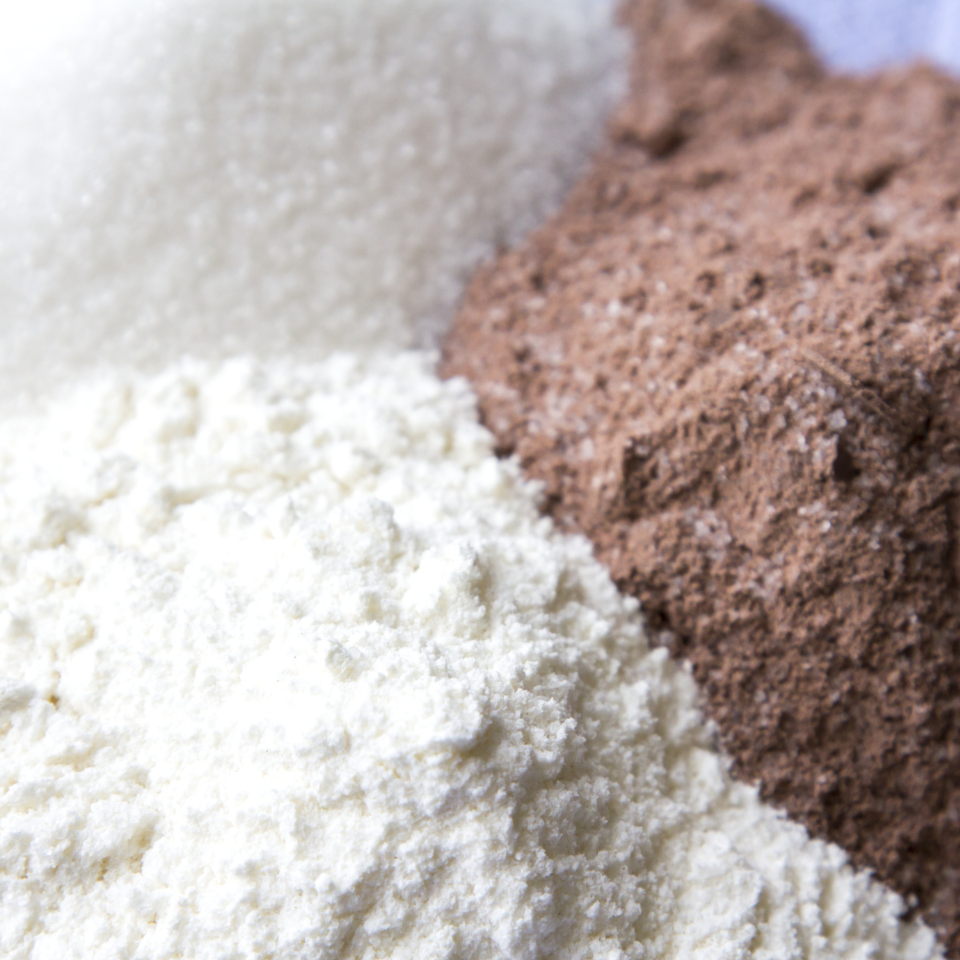
Food ingredients formulations are often complex. Fine powders meet coarse carriers, light components meet heavy ones - and all of this must be brought together in a reproducible, product-friendly manner without loss of functionality. Particularly critical is the handling of sensitive ingredients such as flavors, enzymes, or emulsifiers. They should retain their function completely and be evenly distributed without being mechanically or thermally stressed. At the same time, frequent product changes, small and large batches, and high hygiene standards are a fixed part of everyday production. Another important aspect is the complete emptying of the mixers. Product residues should be avoided to reduce cross-contamination, shorten cleaning times, and optimize the use of valuable ingredients.
amixon® Solutions for Food Ingredients
amixon® develops and builds mixing technology for food ingredients applications, focusing on homogeneity, product protection, and process safety. The systems are designed to enable even distribution of sensitive ingredients in demanding recipes - reproducibly and hygienically.
Typical process engineering applications in the field of food ingredients:
- homogeneous distribution of functional additives
- mixing delicate flavors and enzymes
- processing complex recipes with highly diverse components
- flexible batch sizes with consistent mixing quality
- hygienic processes with quick cleaning
amixon® Mixing Technologies in Focus
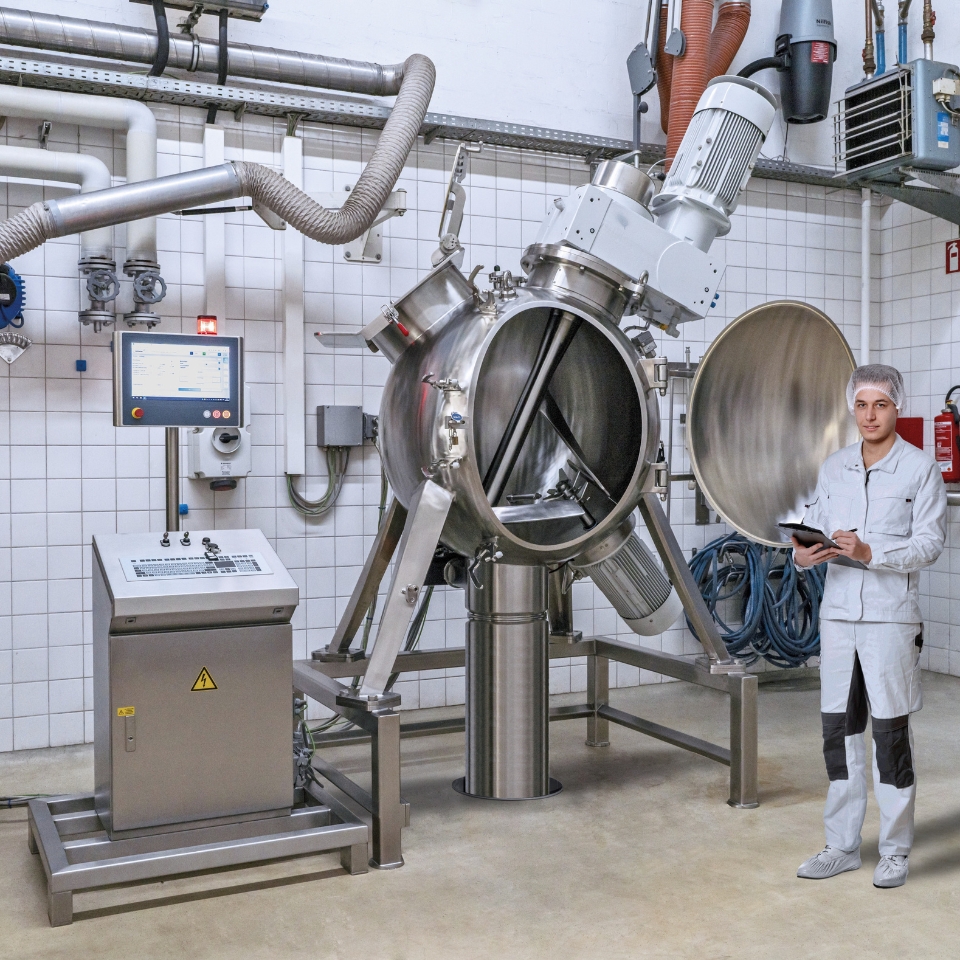
amixon® Spherhelics® Mixer (SH) - the entry into the world of amixon® precision mixers. The SH mixer is designed for a simple, uniform product movement. It is suitable for food ingredients applications where stable mixing conditions and the protection of sensitive additives are paramount.
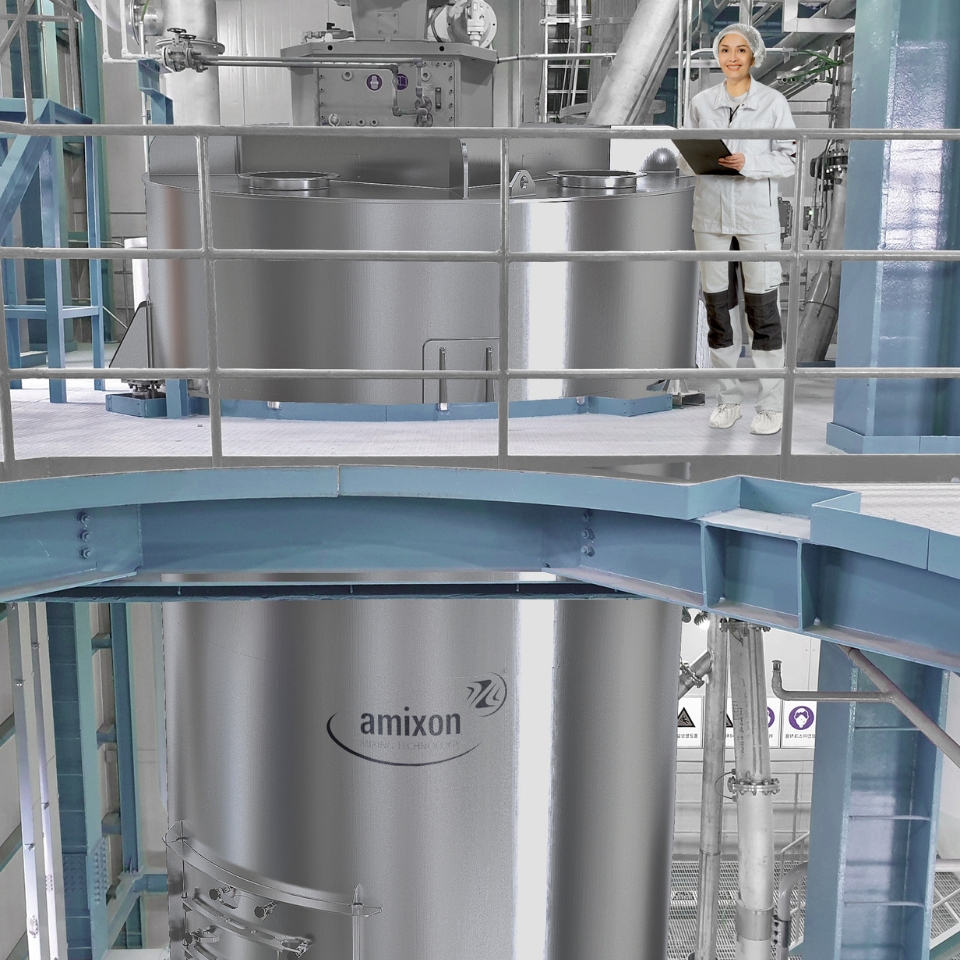
The Gyraton® mixer is a precision silo mixer for larger batches. It combines gentle product movement with high mixing quality and is particularly suitable for food ingredients productions with very large batches of 10 to 100 m³ that need to be homogenized into a single unit.
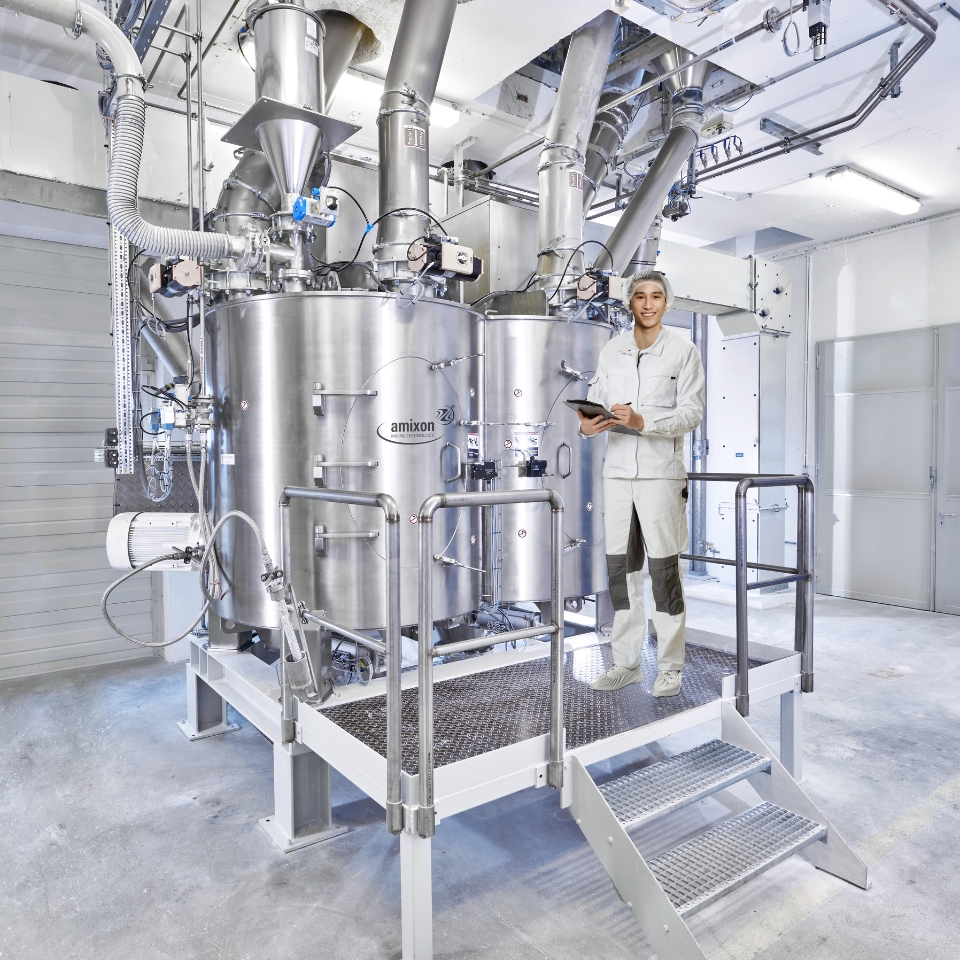
The HM twin shaft mixer enables short mixing times with high homogeneity. Two coaxially rotating mixing shafts ensure intensive but product-friendly mixing. The flat-bottom apparatus can be equipped with SinConvex® mixing tools and ComDisc® discharge elements to guide the mixture specifically to the discharge and support almost complete emptying.
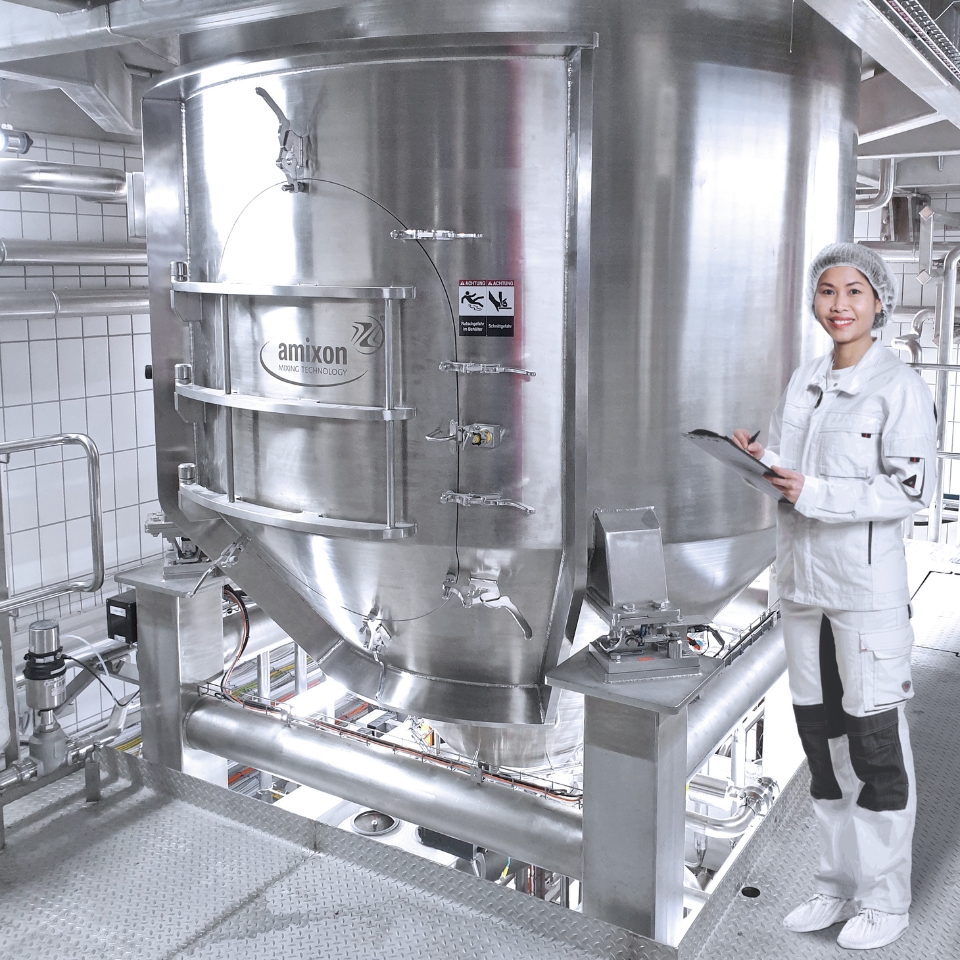
For flexible batch sizes and changing recipes, the amixon® cone mixer (AM) is available. They are used where reproducible mixing qualities and effective emptying are required.
Technical center and process development
In the amixon® technical center, food ingredient formulations can be tested in a practical manner. With original raw materials, mixing quality, product protection, emptying, and cleanability can be evaluated and specifically designed for industrial use.
Food ingredients work in the background - but they determine the quality, stability, and function of the end product. Therefore, a mixing technology that works precisely, gently, and reliably is all the more important.
amixon® develops and builds the appropriate industrial mixers for this purpose.
Talk to us about your food ingredient formulations and your process engineering goals. amixon® - Process technology for functional ingredients.
 Blog
Blog