
Instant food preparation
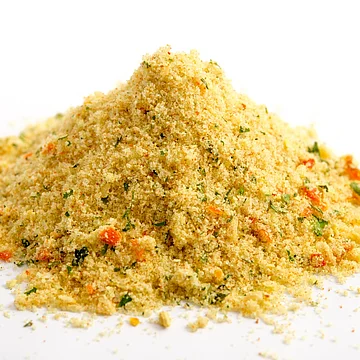
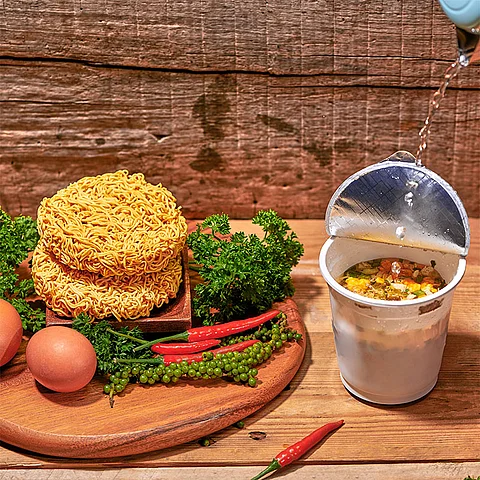
Instant food processing refers to the process chain of process engineering in which powdered instant products - such as soups, baby food, sports nutrition, or beverage powders - are conditioned in such a way that they dissolve quickly, without lumps, and reproducibly in water or milk.
In instant food processing, powdered products are deliberately modified to achieve certain properties such as dispersibility, low dust content, and dosing accuracy. To do this, the raw materials are treated in such a way that their particle size distribution, moisture content, and bulk density are gradually adjusted to a desired target state.
The more uniform these characteristics are after the process, the lower the fluctuations in product behavior, for example, when wetting, flowing, or dosing. Therefore, ideal mixing and agglomeration processes aim to reduce variations in these parameters and to produce the most homogeneous powder form possible. High-quality process plants control thermal and mechanical stresses so precisely that temperature-sensitive ingredients such as vitamins, flavors, or functional proteins largely retain their technological and nutritional functions.
 Related pages