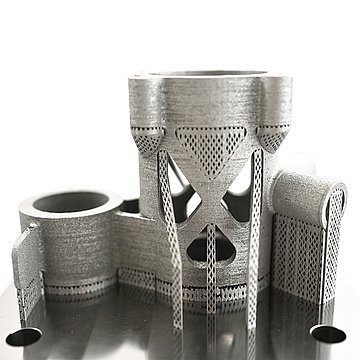

Products of the ceramic industry
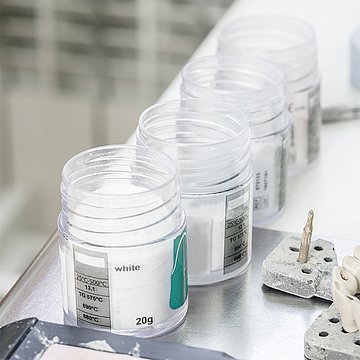
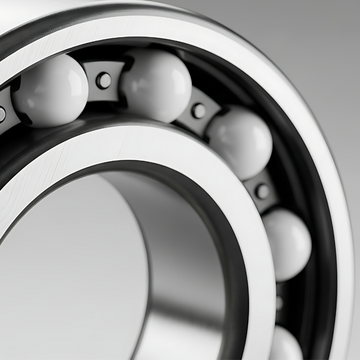
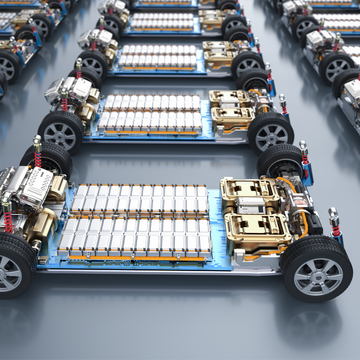
The ceramic industry comprises a variety of technical materials, mostly built from fine inorganic powder raw materials and capable of high performance after shaping. Technical or high-performance ceramics are used where materials are exposed to extreme conditions - such as high temperatures, strong chemical stresses, or mechanical loads. Applications can be found in electronics, sensors, medical technology, energy applications, or mechanical engineering.
Ceramic powders often consist of oxides, nitrides, or carbides and form the basis for a variety of molded parts produced through pressing, injection molding, or additive manufacturing processes. The properties of the powder - particle size, shape, agglomeration degree, and purity - directly affect the quality of the final product.
Typical products and technical terms in ceramic production:
- technical and high-performance ceramics
- ceramic substrates and insulators
- functional ceramics (piezoelectric, electrical)
- zirconia, alumina, silicon nitride powders
- ceramic additives, binders, and granules
- powders for additive manufacturing processes (3D printing)
Requirements for mixing and processing
Ceramic powders are often very fine, highly pure, and sensitive in their particle structure. They should be prepared in such a way that they can be evenly mixed, reliably shaped, and then homogeneously sintered or further processed. A central challenge is to technically combine a wide variety of components ideally and reproducibly. This includes primary powders, binders, functional additives, or dopants that must be distributed precisely - without agglomerates, local overconcentrations, or structural damage to the particles.
Processing very fine, often poorly flowing powders places additional demands on the mixing technology. In addition, wetting or coating steps may be necessary in powder processing, where liquids need to be introduced and then removed in a controlled manner before shaping.
Another practical aspect is the processing of abrasive mixtures. Many ceramic powders, especially those with high levels of hard oxides or carbides, cause significant wear in the mixer. Technologies are needed that ensure a permanently high service life of the mixing tools and mixer walls even with rough mixtures.
amixon® solutions for ceramic processes
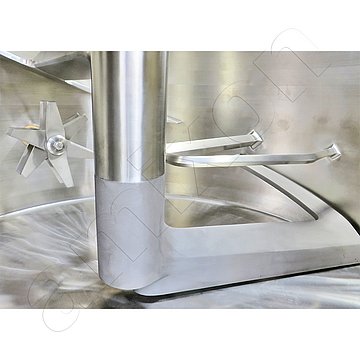
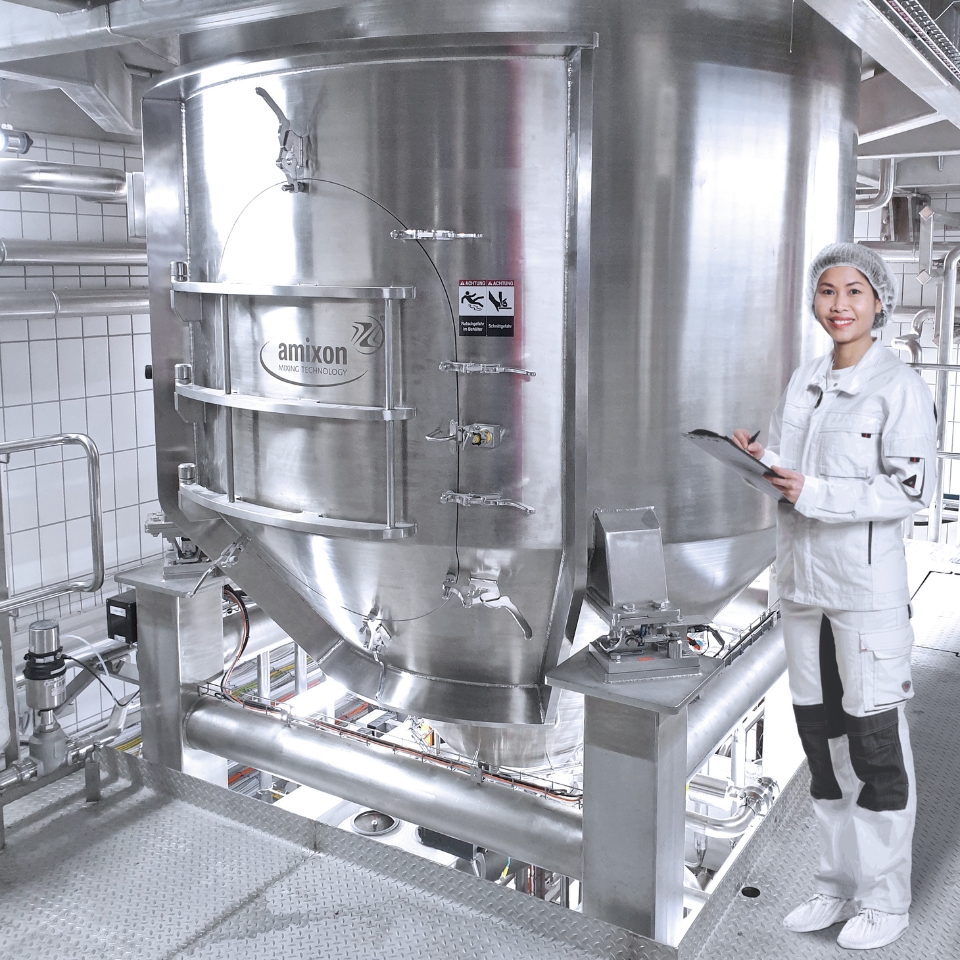
amixon® develops and builds mixing, flow, granulating, mixing-drying, and reactor technology for ceramic processes where powdery systems need to be homogenized, dispersed, and processed. The systems are designed to achieve a uniform mixture, controlled liquid distribution, and reproducible powder characteristics, even with very fine, high-purity, or poorly flowing powders.
Special attention is given to mixtures with high abrasiveness: amixon® offers wear-resistant versions of mixing tools and product-contact surfaces. By using wear-resistant materials, coatings, or replaceable protective elements, abrasion is reduced, machine lifespan is increased, and consistently high mixing quality is ensured, even with highly abrasive ceramic powders.
Typical process tasks in ceramic production:
- homogeneous distribution of oxide, nitride, or carbide powders
- dispersing and breaking down agglomerates
- controlled integration of functional additives
- wetting and targeted drying of sensitive mixtures
- preparation for shaping, sintering, or additive manufacturing
- Wear protection for long-lasting mixer performance.
amixon® process machines at a glance
Vertical cone mixer (AM)
The mixer type AM is a versatile mixer for ceramic powder processes with flexible batch handling. The conical design supports uniform product movement and facilitates complete emptying - an advantage for frequently changing recipes or sensitive ceramic powders.
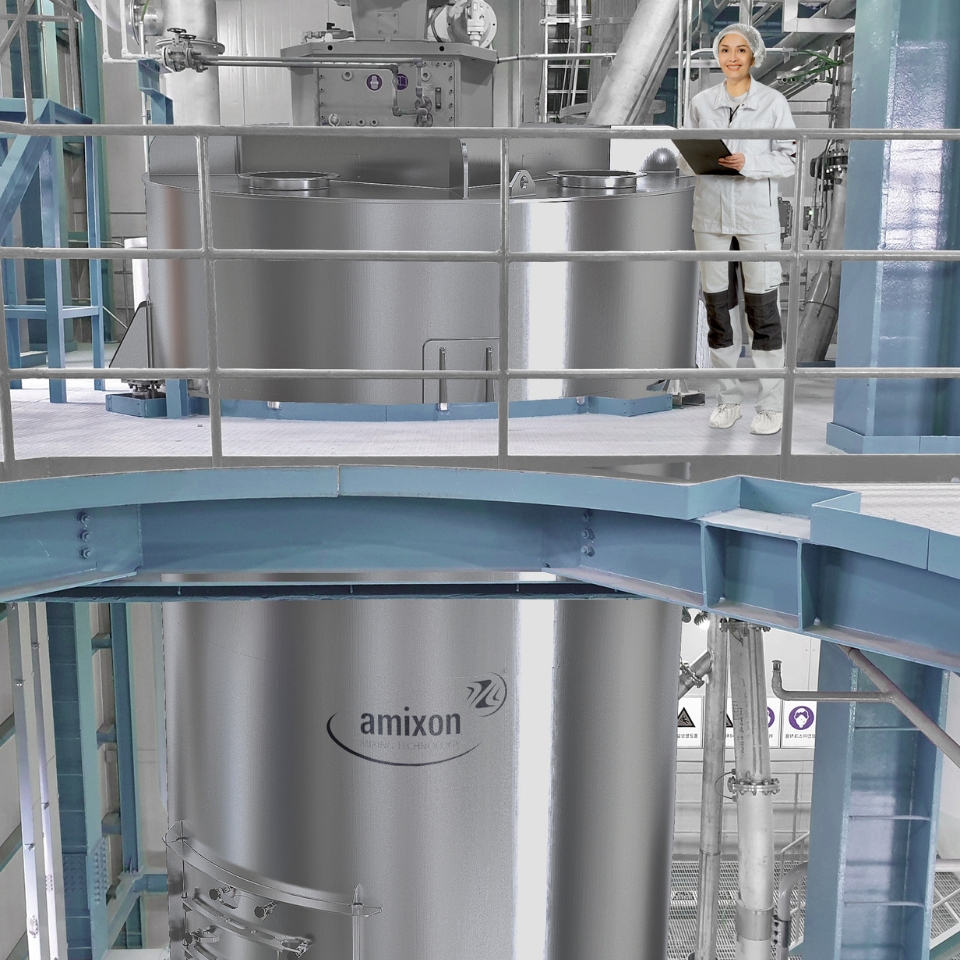
Gyraton® bulk solids silo mixer (GM)
The Gyraton® mixer is particularly suitable for large batches of 10 to 100 m³ and highly heterogeneous mixtures. The gentle product movement combines with high mixing quality - ideal for the homogeneous processing of large powder volumes.
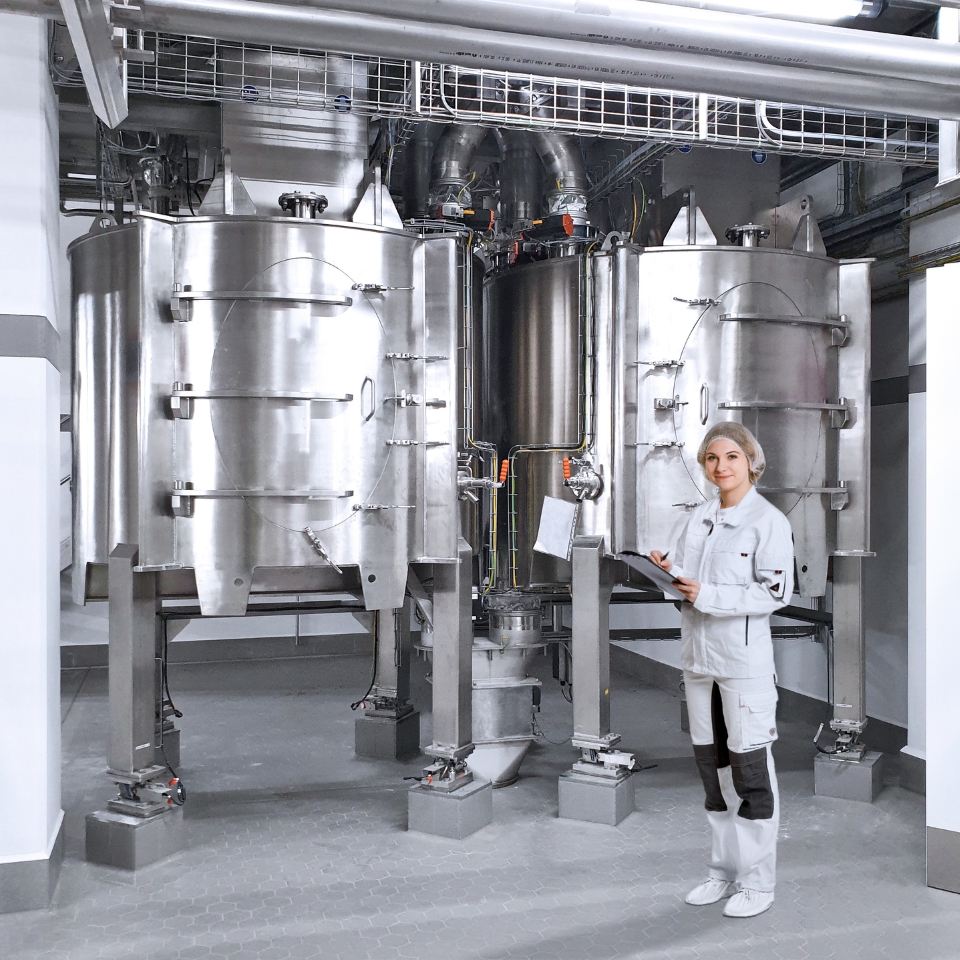
amixon® Vertical Single-Shaft Mixer (VM)
The VM mixer type provides intensive, yet product-friendly mixing and is particularly suitable for the finest ceramic powders that require a uniform distribution of raw materials.
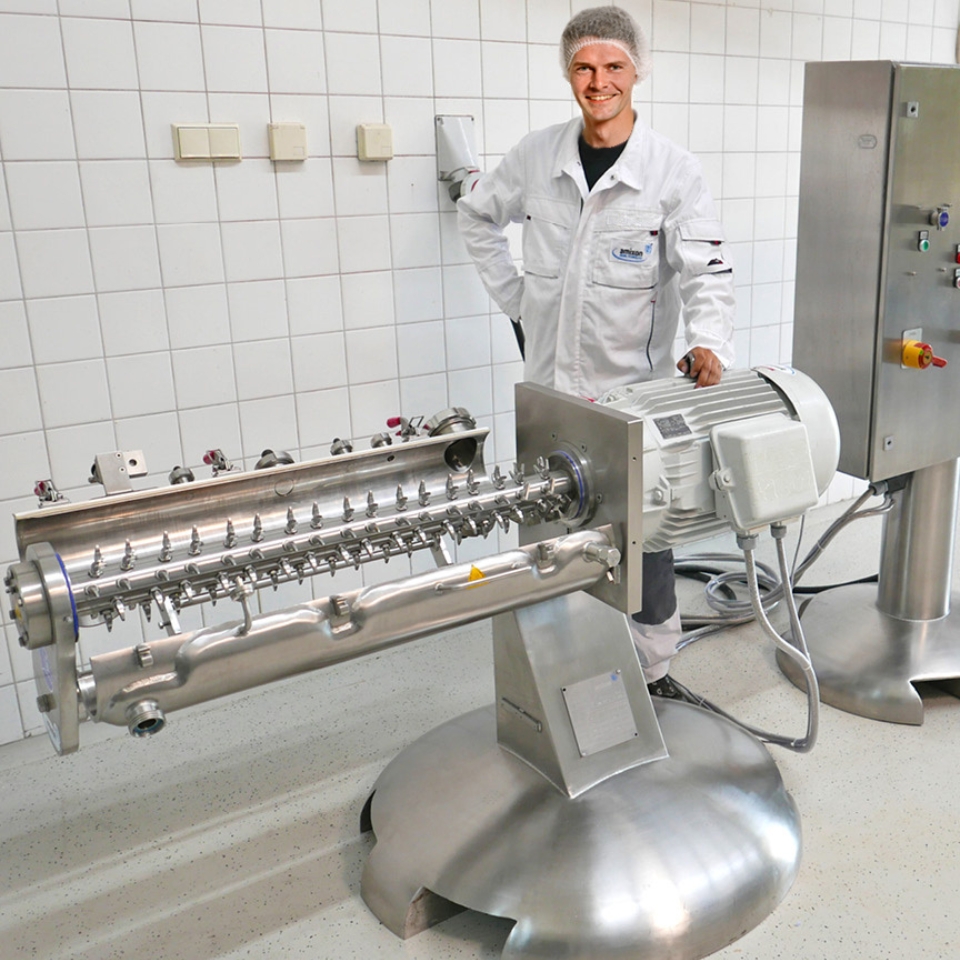
Continuous Granulator (RMG)
The RMG combines continuous mixing, deagglomeration, and agglomeration in one device. It is suitable for formulations where powder and liquid components are to be specifically combined or product structures altered.
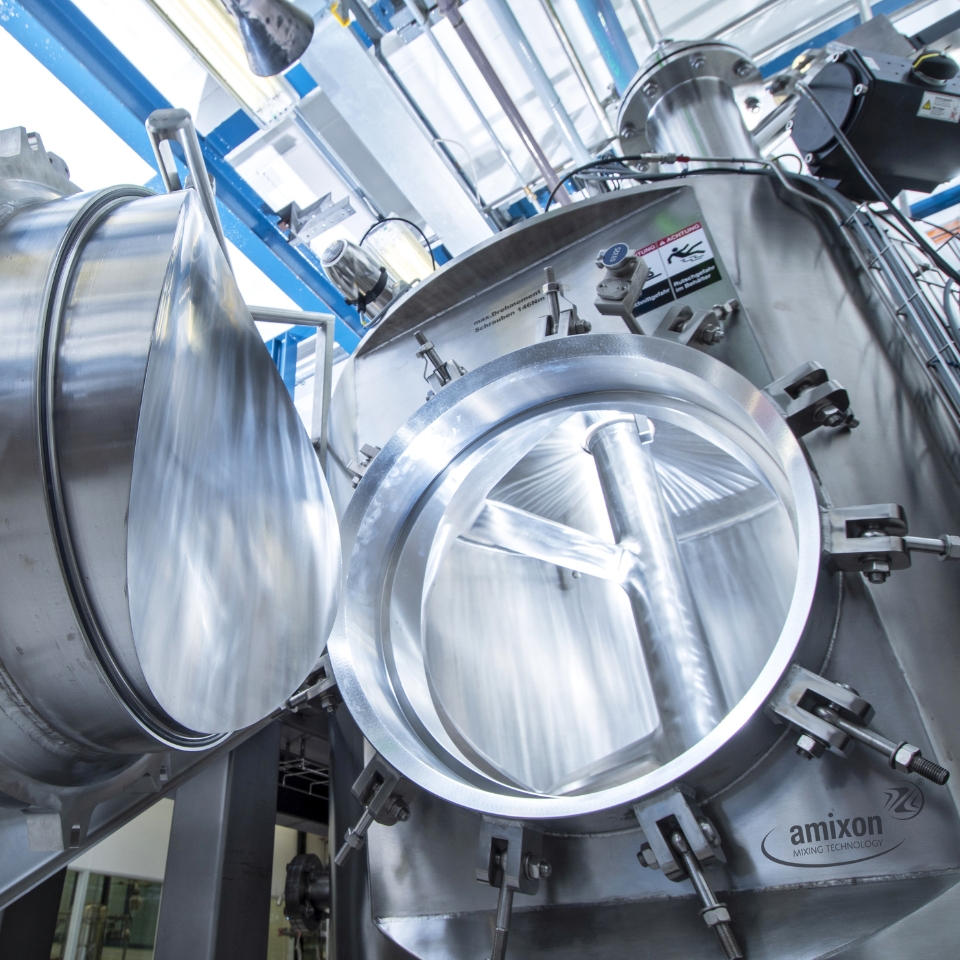
Mixer dryer and Vacuum dryer (VMT)
The type VMT combines mixing, drying, and reacting in one apparatus. Vacuum operation allows moisture or solvents to be gently removed at moderate temperatures. The three-dimensionality of the product movement ensures uniform heat and mass transfer - advantageous for dispersion or binder removal processes.
Technical center and process development
In the amixon® Technical Center, ceramic powder processes can be tested practically with original raw materials. Mixing quality, dispersion, drying, emptying, and cleanability are evaluated together and designed for industrial use. This creates early security in plant planning and process optimization.
Ceramics is a versatile material for the most demanding applications. Successful processes start with high-quality powder processing - from homogeneous mixing to controlled wetting and gentle drying. Especially with abrasive mixed goods, wear-resistant mixing technology is crucial for long service life and stable processes. amixon® develops and builds the appropriate mixing and processing systems for your ceramic powder processes. Talk to us about your ceramic powders, your formulations, and your process goals. amixon® - process technology for demanding ceramic powders and high-performance applications.
 Blog
Blog