
Mixture phases
Mixture phases refer to the successive stages of a mixing process. Different physical and rheological product properties dominate during these stages. Typically, a distinction is made between a dry, a moist and a wet or pasty or suspended phase.
In the dry phase, the particle size distribution, bulk density and cohesive forces influence the mixing behaviour. Typical challenges here are dust formation, segregation and explosion risks.
As more liquid is added, the system transitions into the moist phase. In this phase, capillary liquid bridges, agglomeration and lump formation occur.
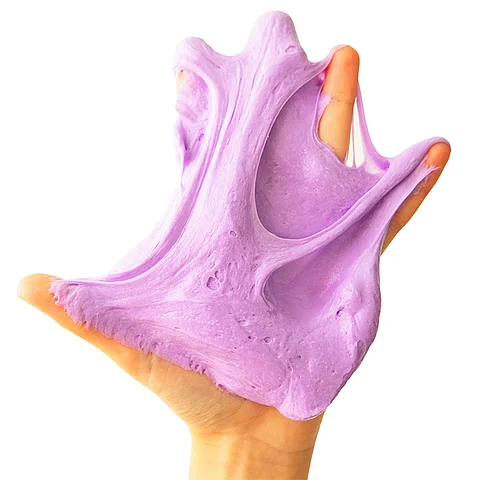
In the wet phase, viscous and plastic properties dominate, making high kneading forces, adhesions and limited flowability relevant.
The transition between these mixing phases is a critical process point, especially with highly viscous liquid components, as the mechanics, energy input and mixing mechanism change fundamentally.
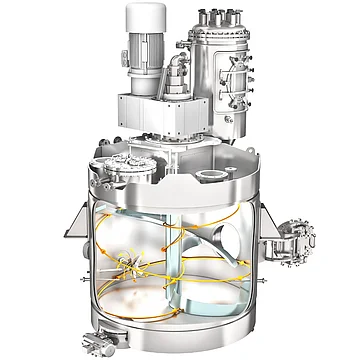
The ability of a mixer to control these phase transitions in a stable and reproducible manner is crucial for process reliability. For example, the phases described above are passed through from bottom to top during the drying of suspensions in a vacuum mixing dryer or contact dryer. amixon® vacuum mixing dryers/synthesis reactors are particularly well suited for this purpose, as their spiral mixing tool rotates slowly and yet ensures ideal mixing quality.