

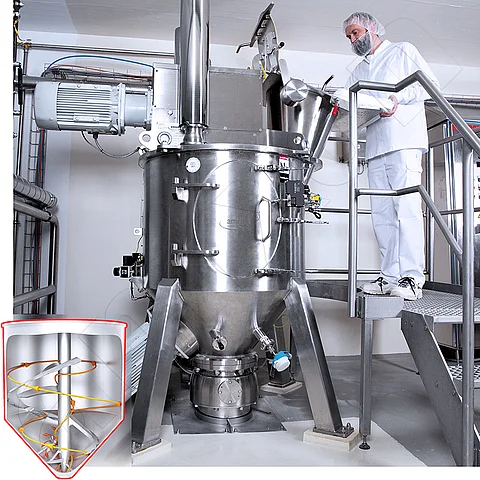
Mixing cycle
The mixing cycle describes the periodically repeating sequence of a batch mixing process. It begins with the filling of the mixing chamber with all components involved in the recipe. This filling step can be carried out in stages in terms of time or material and is then referred to as multi-step mixing. Once filling is complete, the inlet fittings are sealed to be gas- and dust-tight. This is followed by the actual mixing phase, in which defined relative movements of the mixing tools are used to achieve a homogeneous distribution of the components. The duration and intensity of the mixing depend on the product properties, the recipe and the mixing system used.
The discharge fitting is then opened and the mixture is emptied from the mixing chamber. The duration of the individual steps in a mixing cycle is of central importance, especially if a defined plant or product output is specified. In practice, the filling process can be significantly prolonged, for example, by slow dosing units, poor flow properties of individual components or upstream weighing.
Similarly, the discharge volume flow may be limited if downstream processes such as screening machines or magnetic separators determine the discharge rate of the mixer. In such cases, in addition to the pure mixing time, the emptying characteristics of the batch mixer must be taken into account. These have a significant influence on the achievable throughput of the entire plant. Depending on the type of product and process requirements, a cleaning, residual emptying or product discharge step may be necessary between discharge and the re-closing of the discharge valve. Once the discharge valve has been closed, the mixing cycle is complete and the process begins again with the next batch.