
cellulose derivatives
Cellulose derivatives are polymers built from the basic cellulose backbone, in which, however, some of the three hydroxyl groups per glucose unit have been replaced by other groups such as methyl, ethyl, hydroxypropyl, acetyl, nitrate or carboxymethyl groups. The type and degree of these substitutions allow for the targeted adjustment of solubility, viscosity build-up, gelling behaviour, film formation, surface activity and thermal stability.
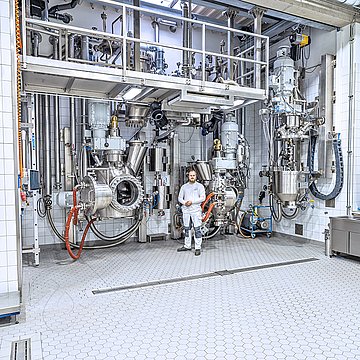
Typical examples include methylcellulose (MC), hydroxypropyl methylcellulose (HPMC), carboxymethylcellulose (CMC), cellulose acetate and cellulose nitrate. They are used in foodstuffs, pharmaceuticals, construction chemicals, paints, varnishes and technical applications as thickeners, stabilisers, binders, film-formers or structuring agents. For amixon®, the group of cellulose derivatives is particularly relevant because many of these substances are processed in powder mixers as finely dispersed powders or as components of liquid binders, thereby significantly influencing the flow behaviour, agglomeration and texture of the end product.
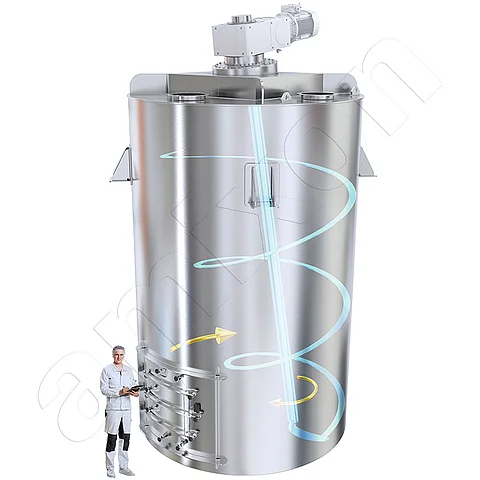
It is advantageous for manufacturers and consumers to blend large quantities of these functional additives prior to packaging. The Gyraton silo mixer is designed for the precise blending of batches with a volume of up to 100 m³. Depending on process requirements, these can be blended either continuously or in batches.
 Blog
Blog