
Vacuum drying (bulk solids and suspensions)
Vacuum drying is a process for removing water or solvents under reduced pressure. The pressure in the drying chamber is below atmospheric pressure. This lowers the boiling point of the liquid. Drying can take place at low temperatures. Temperature-sensitive products are protected. Oxidation and thermal decomposition are reduced.
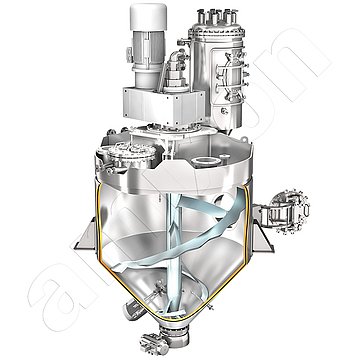
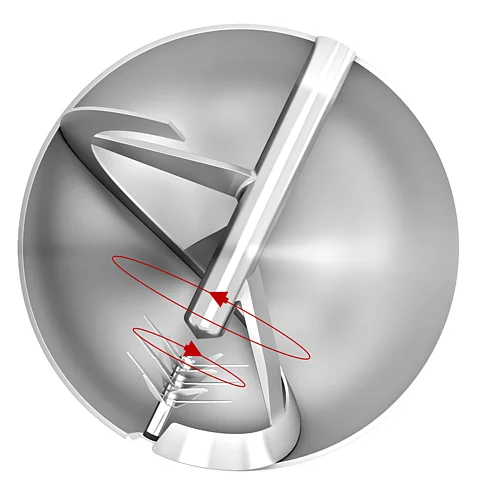
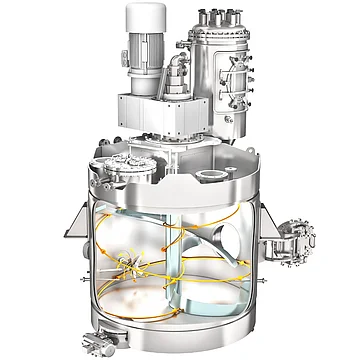
For bulk materials, vacuum drying often takes place in mixers, contact dryers, or paddle dryers. The product is moved to achieve a uniform temperature and moisture distribution. Heat is supplied via temperature-controlled wall surfaces or mixing tools. The vapor is removed via vacuum pumps and condensers.
Before drying, suspensions can be dewatered, thickened, or evaporated directly under vacuum. In thin-film evaporators, vacuum distillers, or vacuum contact dryers, the solvent is evaporated and condensed. The remaining solid phase is concentrated or dried.
For drying, consistent temperature control of all product-contact surfaces is important. Cold surfaces lead to recondensation of vapor and reduce drying efficiency. A high specific heat-transfer area increases the evaporation rate and shortens the process time.
Vacuum drying is used in the chemical, food, pharmaceutical, battery, and plastics industries. It is particularly suitable for hygroscopic, temperature-sensitive, toxic, or solvent-containing products.

 FAQ - Vacuum drying (bulk solids and suspensions)
 Blog
Blog