

Thixotropic
Thixotropy refers to a time-dependent, non-Newtonian flow behavior in which, under sustained shear, the apparent viscosity decreases. At rest, the internal microstructure rebuilds; the viscosity increases accordingly. Thixotropic materials have a microstructure that is destroyed by shear and regenerates at rest. Typical examples are suspensions, pastes, gels, paints, and highly filled polymers.
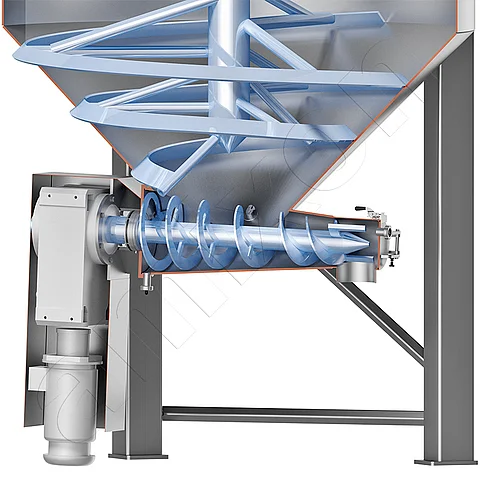
Thixotropy affects mixing, pumping, conveying, and dosing and is therefore important for the design of mixers, agitators, and pipelines. In process engineering it is often described using structural-kinetic models.