
amylose content
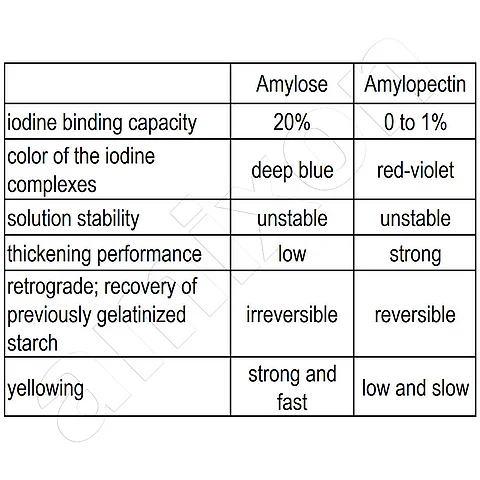
The amylose content refers to the mass or percentage of the linear starch component amylose in a starch-containing raw material. Starch consists essentially of two polysaccharides: amylose and amylopectin. The amylose content varies depending on botanical origin and processing. Amylose is a predominantly linear polysaccharide composed of α-1,4-linked D-glucose units. A high amylose content leads to a greater tendency to gel and to the formation of firm structures after cooling. At the same time, retrogradation increases.
In process engineering, the amylose content has a significant influence on the gelatinisation properties, viscosity and texture of starch-containing systems. Products with a high amylose content often exhibit greater strength, lower swelling capacity and more pronounced structural stability. The amylose content is particularly relevant in the food industry, paper and board production, construction chemicals, and in the manufacture of binders and biopolymers. It determines behaviour during mixing, heating, cooling and drying.
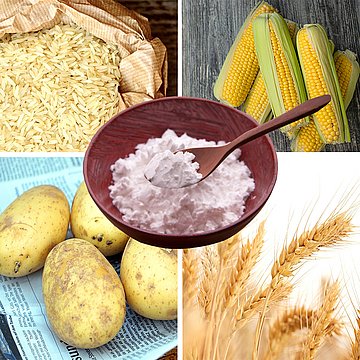
By selecting the source of starch or modifying the starch, the amylose content can be tailored to the specific application.
 Blog
Blog
 Related pages