
Mixing shaft
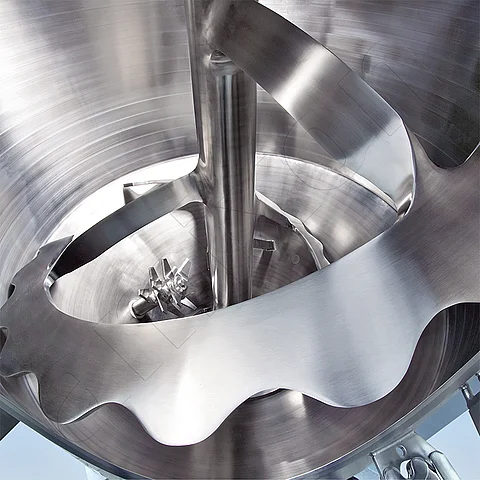
The mixing shaft is the central, load-bearing component of an industrial powder mixer. It is motor-driven and transmits the torque as well as the bending and torsional forces to the mixing arms and mixing tools. Its mechanical design is safety-relevant and of crucial importance for the operational safety of the mixing system.
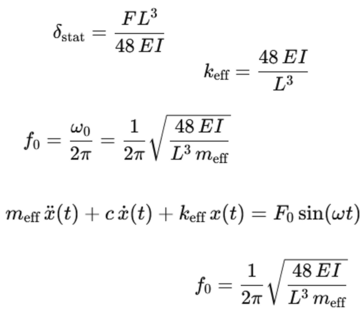
Mixing shafts must have a very high degree of rigidity. Even under maximum design load, only minimal elastic deformation is permitted. Plastic deformation must be ruled out under all operating conditions, as this would lead to considerable safety risks. For this reason, mixing shafts are designed to be significantly oversized in practice.
In powder mixers with a horizontally arranged mixing shaft, bearings on both sides are common. The drive with bearings is located on one side, while the opposite side is also supported. This minimises shaft deflection.
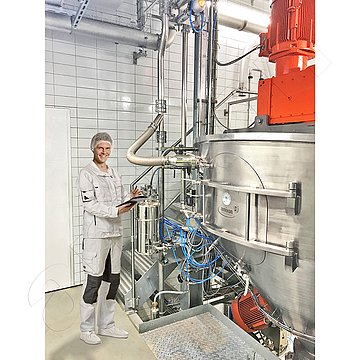
Mixers with a vertically arranged mixing shaft, on the other hand, are often only supported on one side, either above or below the mixing chamber. In amixon® mixers, on the other hand, the bearings are always located above the mixing chamber. This design offers several process-related and structural advantages. The shaft seal is used exclusively to seal against dust, not against the mixed material. This means that it is exposed to less mechanical and abrasive stress.
The overhead bearing and drive unit also facilitates complete and residue-free cleaning of the mixing chamber. If the drive were located below the mixing chamber, the shaft seal would be permanently exposed to back pressure and wear from the bulk material. This would have a negative impact on both the service life of the seal and the cleanability of the mixer.
When amixon® mixers are used as vacuum dryers or contact dryers, the mixing shaft is often designed as a hollow shaft. In this case, a heat transfer fluid flows through it to enable direct and even heat transfer to the mixture. Even in this design, the mixing shaft is greatly oversized. Even under thermal stress and overload situations, elastic deformations are negligible.
 FAQ - Mixing shaft
 Blog
Blog