
mixing room
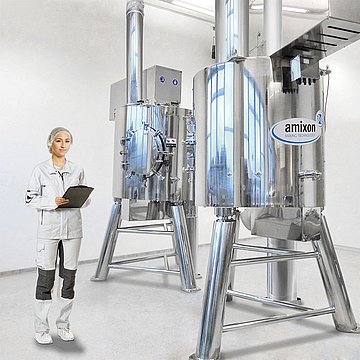
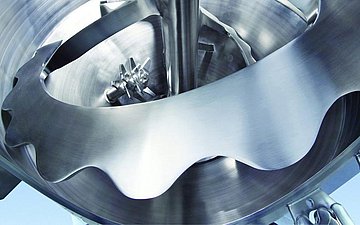
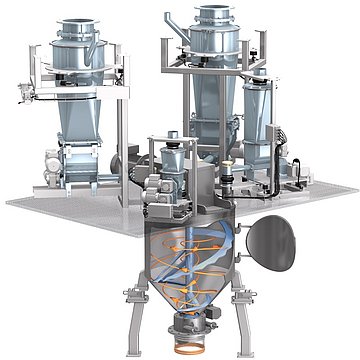
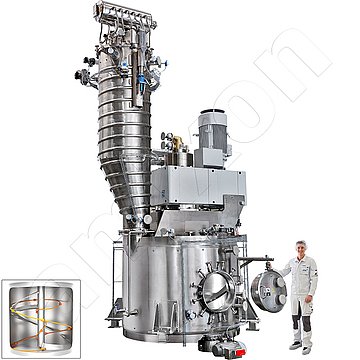
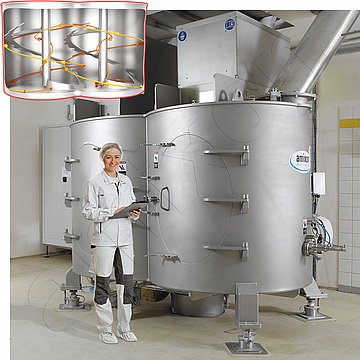
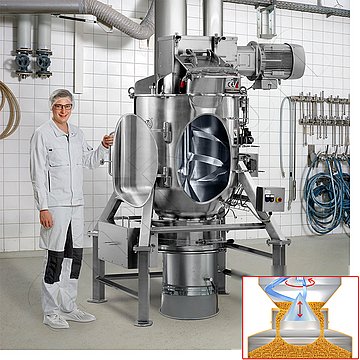
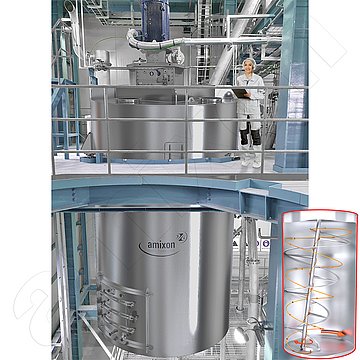
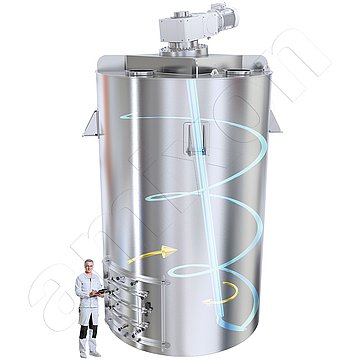
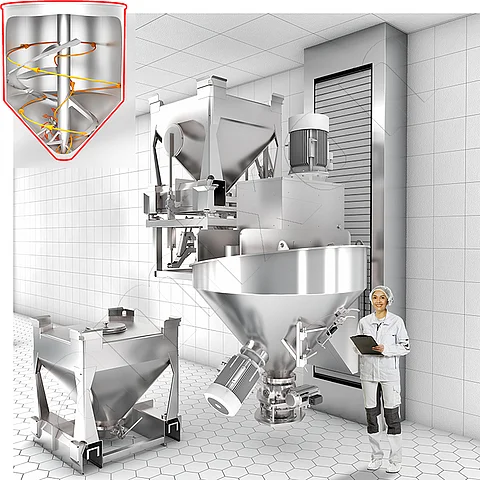
The mixing chamber is the central component of every mixer. It is where all kinds of materials are mixed homogeneously. During the batch mixing process, the mixing chamber is sealed gas-tight. This protects the product from moisture and foreign substances. Conversely, the environment is protected from dust and odours. The mixing chamber is opened for filling. Mixing is followed by discharge. For this purpose, each mixing chamber has at least two fittings: one at the top for filling and one at the bottom for discharging.
Mixing tools rotate in the mixing chamber, moving the product without creating dead space. The drive shaft is carefully sealed. This seal prevents air from entering or powder from escaping. The mixing chamber of every mixer must not be filled to 100% capacity. A so-called gas volume is required to ensure free flow. For powder mixers, the net volume is approximately 60 to 75% of the gross volume. The exact measurement depends on the material being mixed, the design of the mixer and the operating mode. Exceptions to this are "extruder mixing" and some liquid mixers.
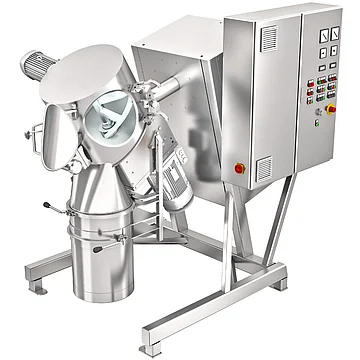
amixon® manufactures precision mixers. They are also known as push or forced mixers. All particles are moved without dead space. There are no dead zones in the mixing chamber. This results in perfect mixing quality that cannot be improved upon. The mixing chambers from amixon® come in various shapes. They are designed as hollow spheres, cylinders, cones or double cylinders.
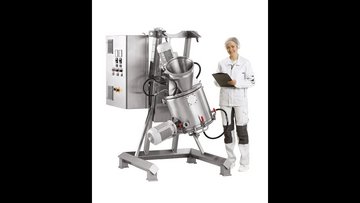
In addition to these precision mixers, there is also the "free-fall mixer" type. These operate without mixing tools. The entire mixing chamber rotates around a horizontal axis. This movement creates the mixing effect.
Continuous mixers are usually open. Gas-tight encapsulation from atmospheric influences is only possible at great expense.

 FAQ - mixing room
 Blog
Blog