

agglomeration nucleus
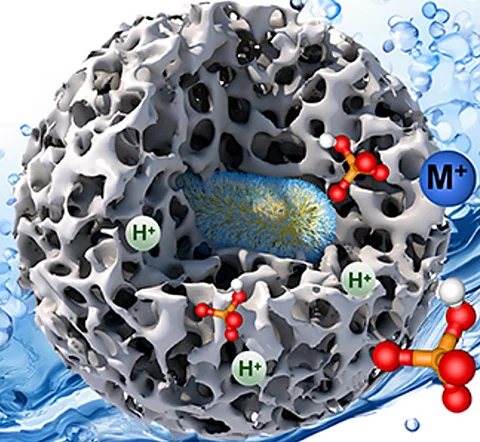
An agglomeration seed is a single particle or a small cluster of particles at which agglomeration begins. It possesses properties that encourage further particles to adhere to it – for example, slightly higher moisture content, stickiness or a particular surface structure. As a result, it is energetically more favourable for new particles to adhere to this seed than to form a new seed. Starting from the agglomeration seed, a larger agglomerate gradually grows, for example in rotary tube granulators, fluidised bed systems or mixing granulators. The behaviour of the agglomeration seed is similar to that of a crystallisation seed: a small ‘starting point’ determines where and how quickly particle clusters form and continue to grow.
A simple physical description is often based on a growth rate, for example in the form
dr/dt = k × f(wetting, collisions)
- r is the effective agglomerate radius
- It's time
- k is a constant that depends on the material and the process
- The function f(… ) essentially represents factors such as the liquid film, collision frequency and probability of adhesion.
This type of equation should be understood as a model and is applied differently depending on the process (fluidised bed, drum or mixing agglomeration).