
Shaft seal
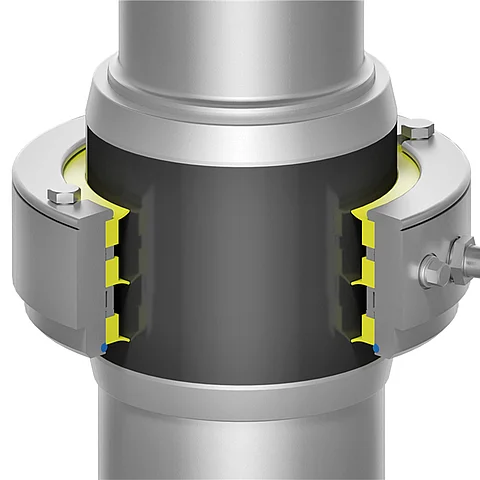
A shaft seal is a structural component designed to seal a rotating or oscillating shaft against the surrounding process space. It prevents product, dust, vapours or gases from escaping along the shaft, and prevents ambient air from entering the apparatus.
There are numerous types of shaft seals. The choice depends on the medium, pressure, temperature, speed and lubrication conditions. In gearboxes, sealing is relatively straightforward. Lip seals or radial shaft seals are frequently used there. These are adequately lubricated by the oil present in the gearbox and have proven their worth in practice.
Sealing turbine shafts is a far more challenging task, for example in steam turbines. Here, gland packings, mechanical seals or labyrinth seals are used. Often, several sealing principles are combined to reliably cope with high speeds, temperatures and pressure differentials.
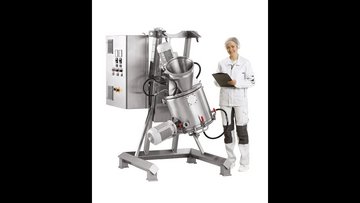
Mixing dryers and synthesis reactors are subject to particularly stringent requirements. Their process chambers must not be contaminated by foreign substances. Lubrication with oil or grease is not permitted in these applications. Gas-lubricated mechanical seals are frequently used in such applications. The gas forms a thin lubricating film that minimises friction and wear whilst ensuring a clean, media-free seal.
Alternatively, PTFE lip seals can also be used. These special lip seals operate in a dry state or with process gas as a barrier medium and do not require liquid lubricants. In suitable applications, they offer a simpler design and a low-maintenance alternative to mechanical seals, particularly at moderate pressures and circumferential speeds.
 Blog
Blog