Esterification
In esterification, an acid and an alcohol react with each other. This produces an ester and, as a rule, water as a byproduct. The reaction is temperature-dependent and often catalyzed. It is a fundamental process in organic chemistry and in industrial materials production.
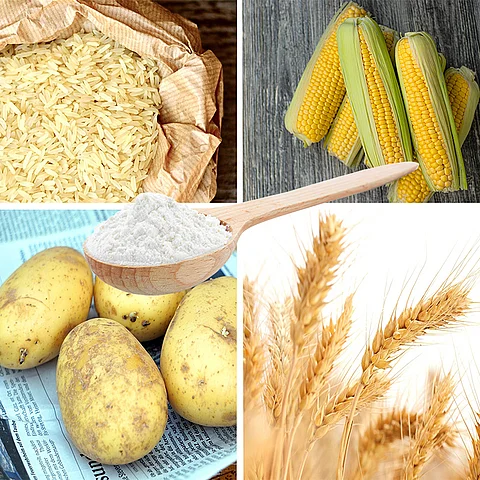
In process engineering, esterification plays an important role in the modification of natural polymers. Thus, starch and cellulose can be selectively chemically modified by esterification. This yields functionalized derivatives with new physical properties. Examples include starch esters, cellulose acetate, and other cellulose derivatives. These materials exhibit improved solubility, thermoplasticity, or processability.
Esterification reactions are also central to the production of many plastics. Thus, controlled esterification produces polyesters, resins, and coatings. The way the reaction is conducted influences molecular weight, viscosity, and material properties.
The simplified reaction equation is:
Acid + alcohol ⇌ ester + water
The reaction is an equilibrium process. By increasing the temperature, adding a catalyst, or removing water, the equilibrium can be shifted toward ester formation. Therefore, in industrial reactors water is often removed continuously.
 Related pages