

adsorption capacity
Adsorption capacity refers to the ability of a solid to bind gases, vapours or dissolved substances to its surface.
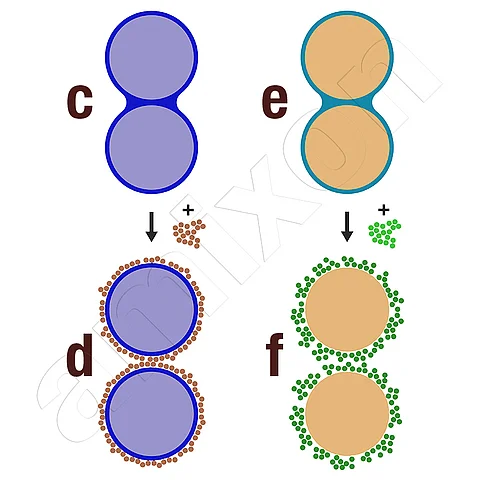
Adsorption occurs through physical or chemical means and, strictly speaking, involves binding to the surface of the adsorbent; in the case of porous solids, this also includes the internal pore surface. Unlike absorption, the adsorbate does not penetrate into the bulk of the material, but instead accumulates predominantly on its surfaces.
Adsorption capacity depends heavily on the specific surface area, pore structure and surface chemistry of the material. Fine-pored and highly porous materials such as activated carbon, silica gels, zeolites or certain powders exhibit a particularly high adsorption capacity.
In process engineering, adsorption capacity is crucial for processes such as drying, gas purification, decolourisation, odour removal and substance separation. In bulk materials, too, it influences moisture behaviour, flowability and the tendency to agglomerate.
Adsorption capacity depends on temperature, pressure, the concentration of the adsorbate and contact time. As the temperature rises, the adsorption tendency often decreases. Intensive mixing can improve mass transfer to the surface and accelerate adsorption.