

Absolute pressure
In the construction of equipment for thermal and mechanical process engineering, pressure specifications play a central role. Due to their design, process vessels are often assigned a maximum permissible overpressure. Equally important is the question of whether a vessel can safely withstand a vacuum inside.
Not all vessels are vacuum-tight. A liquid vessel or a silo for powdered products can be damaged very quickly under negative pressure, for example due to buckling or an unstable wall. Conversely, an impermissible overpressure can also cause irreparable damage to a vessel. It must therefore always be clearly defined whether a pressure specification refers to atmospheric pressure or a vacuum. Relative pressure is the pressure difference from the prevailing atmospheric pressure. In practice, it is often stated as gauge pressure and can be positive or negative. Absolute pressure, on the other hand, refers to zero pressure in an absolute vacuum.
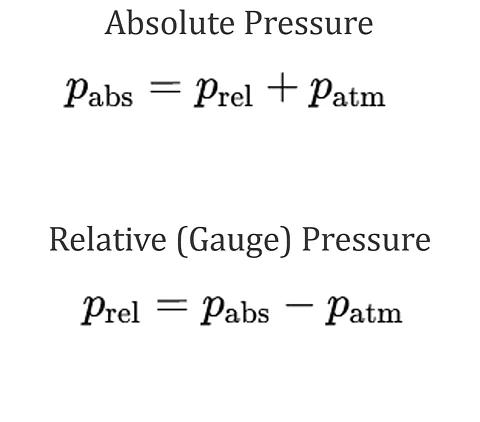
The formula for conversion is:
- p_(abs) = p_(rel) + p_(atmos)
- p_(rel) = p_(abs) - p_(atmos)
Air pressure at sea level varies depending on weather conditions and location. As a result, relative pressure readings change slightly, whilst absolute pressure readings remain unaffected. Absolute pressure values are therefore usually used for technical and scientific calculations.
In vacuum technology, a rough distinction is made between different pressure ranges:
- Rough vacuum: 1 bar to 1 mbar
- Fine vacuum: 1 mbar to 10^(−3) mbar
- High vacuum: 10^(−3) to 10^(−7) mbar
- Ultra-high vacuum: less than 10⁻⁷ mbar.
Synthesis reactors and vacuum mixing dryers often have two pressure chambers. The process chamber is the space in which the products are mixed or dried. This often includes the attached filter. The double-jacket chamber is the area in which the heat transfer medium, such as thermal oil, water or steam, circulates. The permissible overpressure in each case has a major influence on the design, wall thickness, sealing concept and price of a piece of equipment. Pressure-bearing equipment components can pose significant hazards in the event of failure and must therefore be designed, manufactured and approved in accordance with the applicable standards and guidelines.