

Three phases. One machine. amixon® mixing technology for detergents and metal soaps
Amixon® showcases a portfolio of vertical batch and continuous mixers plus a conical mixing dryer/reactor for producing powdered detergents and metal soaps, spanning homogenization, drying, and in-unit synthesis. The VM mixer handles heterogeneous detergent powders, the AM cone mixer offers gentle mixing with minimal residue, continuous mixers support high-throughput stable lines, and the AMT conical mixer-dryer/reactor provides uniform heat transfer for one-pot synthesis, mixing, and drying of metal soaps. Designed for cleanability, high residual discharge, and explosion protection, all systems can be validated with real materials at the Paderborn pilot plant to ensure consistent quality, packaging flowability, and lower environmental impact through precise additive distribution.
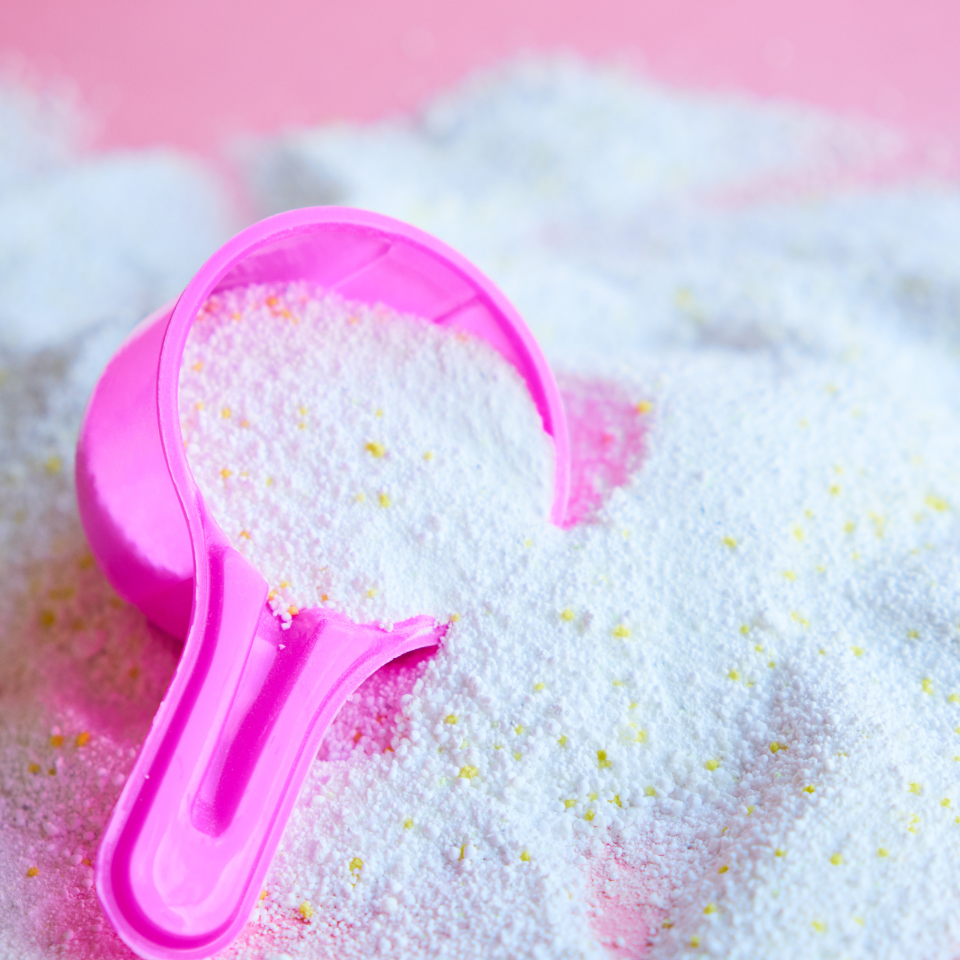
amixon® develops and manufactures vertical batch and continuous mixers, as well as mixing dryers and reactors, for the production of powdered detergents, cleaning agents, and metal soaps in various consistency phases. The equipment homogenizes heterogeneous solid systems with varying bulk densities and particle sizes, enables precise mixing and, where necessary, drying of the raw materials, and ensures high mixing quality with excellent residual discharge rates. At the pilot plant in Paderborn, mixing and reaction processes can be tested with actual raw materials under real-world conditions, ensuring that design and investment decisions are based on reliable data.
From Raw Material to a Homogeneous Mixture
In the detergent industry, powder and granule products are manufactured that combine multiple components into highly effective cleaning agents. These include surfactants, water softeners, stabilizers, dirt-carrying agents, bulking agents, and anti-caking salts, as well as functional additives, which together determine cleaning performance, flowability, and storage stability.
Metal soaps such as calcium, magnesium, zinc, or aluminum stearate, on the other hand, are a distinct product category with their own field of application: Among other things, they serve as lubricants in metal processing, as stabilizers in plastics processing, and as flow and tableting aids in pharmaceutical, cosmetic, and food applications. At amixon®, detergent powders and metal soaps are therefore treated as two separate product lines, each with its own process requirements, though both are based on the same machine and pilot plant expertise.
For powdered detergents to perform effectively, the powdered raw materials must be homogeneous prior to formulation and free of agglomerates or local variations in concentration. The process engineering challenge is to transform the heterogeneous raw materials into a stable, low-segregation, and reproducible mixture—while simultaneously adjusting flow properties and free-flowing characteristics so that filling and packaging lines can be filled uniformly.
Trace additives such as citrates, polyaspartic acid, and surfactant-compatible alcohols must be distributed during the mixing process in such a way that they fulfill their intended function in the final product and in wastewater. They help ensure that detergent active substances are completely degraded by natural microorganisms, thereby reducing environmental impact. Mixing technology thus influences not only product performance and plant productivity but also the environmental impact of detergents.
In the detergent industry, powder and granule products are manufactured that combine multiple components into highly effective cleaning agents. These include surfactants, water softeners, stabilizers, dirt-carrying agents, bulking agents, and anti-caking salts, as well as functional additives, which together determine cleaning performance, flowability, and storage stability.
Metal soaps such as calcium, magnesium, zinc, or aluminum stearate, on the other hand, are a distinct product category with their own field of application: Among other things, they serve as lubricants in metal processing, as stabilizers in plastics processing, and as flow and tableting aids in pharmaceutical, cosmetic, and food applications. At amixon®, detergent powders and metal soaps are therefore treated as two separate product lines, each with its own process requirements, though both are based on the same machine and pilot plant expertise.
For powdered detergents to perform effectively, the powdered raw materials must be homogeneous prior to formulation and free of agglomerates or local variations in concentration. The process engineering challenge is to transform the heterogeneous raw materials into a stable, low-segregation, and reproducible mixture—while simultaneously adjusting flow properties and free-flowing characteristics so that filling and packaging lines can be filled uniformly.
Trace additives such as citrates, polyaspartic acid, and surfactant-compatible alcohols must be distributed during the mixing process in such a way that they fulfill their intended function in the final product and in wastewater. They help ensure that detergent active substances are completely degraded by natural microorganisms, thereby reducing environmental impact. Mixing technology thus influences not only product performance and plant productivity but also the environmental impact of detergents.
Which devices are best suited for which tasks?
Vertical Single-Shaft Mixer (VM)
Precision mixer for heterogeneous powdered detergents with widely varying bulk densities. It is used when a wide variety of powdered components—such as surfactants, fillers, or functional additives—need to be blended uniformly.
Cone Single-Shaft Mixer (AM)
Cone mixer for applications requiring gentle product handling, flexible batch sizes, and discharge with minimal residue. It is particularly suitable when very small amounts or colored components need to be evenly distributed throughout detergent powder.
Continuous Mixer
A continuous mixer for powdered detergents in which multiple component streams are continuously combined to produce all-purpose detergents, color-safe detergents, or delicates detergents. These mixers are ideal when high line throughput and consistent mixing quality are required in a continuous flow.
Conical Mixing Dryer and Reactor (AMT)
Process equipment for the production of metal soaps as well as other processes with high heat transfer requirements. Heated walls and mixing tools ensure uniform heat distribution, while the conical bottom facilitates complete residue discharge.
Vertical Single-Shaft Mixer (VM)
Precision mixer for heterogeneous powdered detergents with widely varying bulk densities. It is used when a wide variety of powdered components—such as surfactants, fillers, or functional additives—need to be blended uniformly.
Cone Single-Shaft Mixer (AM)
Cone mixer for applications requiring gentle product handling, flexible batch sizes, and discharge with minimal residue. It is particularly suitable when very small amounts or colored components need to be evenly distributed throughout detergent powder.
Continuous Mixer
A continuous mixer for powdered detergents in which multiple component streams are continuously combined to produce all-purpose detergents, color-safe detergents, or delicates detergents. These mixers are ideal when high line throughput and consistent mixing quality are required in a continuous flow.
Conical Mixing Dryer and Reactor (AMT)
Process equipment for the production of metal soaps as well as other processes with high heat transfer requirements. Heated walls and mixing tools ensure uniform heat distribution, while the conical bottom facilitates complete residue discharge.
VM Vertical Single-Shaft Mixer: Homogenization of Heterogeneous Powders
The amixon® VM Vertical Single-Shaft Mixer provides intensive yet controlled mixing and is used when a wide variety of powders with varying properties need to be uniformly combined—such as surfactants, fillers, or functional additives in detergent formulations. The slow, controlled product movement and the special geometry ensure that high mixing quality is achieved with low energy consumption.
The mixing systems are designed so that production-related parameters such as batch size, fill level, and energy input can be flexibly adapted to the respective formulation. High residual discharge rates facilitate product changeovers and help ensure that subsequent cleaning processes can be carried out efficiently.
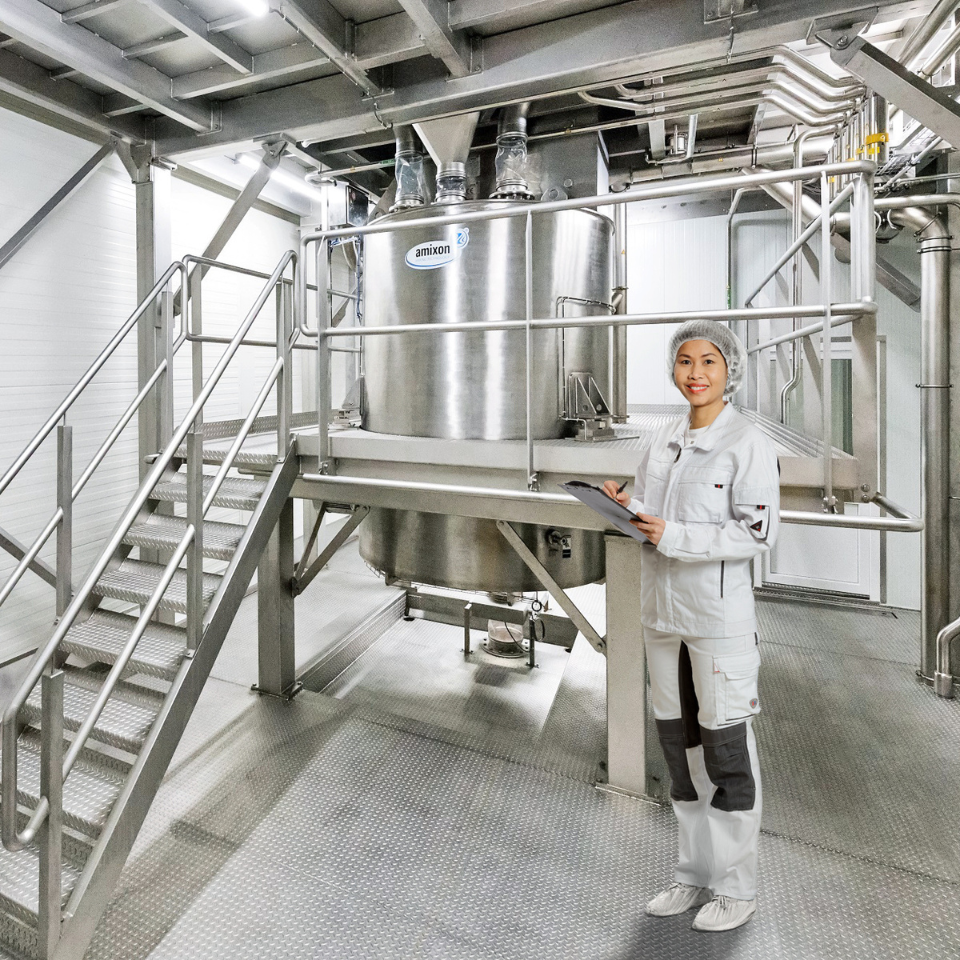
The VM vertical single-shaft mixer provides intensive yet controlled mixing
The amixon® VM Vertical Single-Shaft Mixer provides intensive yet controlled mixing and is used when a wide variety of powders with varying properties need to be uniformly combined—such as surfactants, fillers, or functional additives in detergent formulations. The slow, controlled product movement and the special geometry ensure that high mixing quality is achieved with low energy consumption.
The mixing systems are designed so that production-related parameters such as batch size, fill level, and energy input can be flexibly adapted to the respective formulation. High residual discharge rates facilitate product changeovers and help ensure that subsequent cleaning processes can be carried out efficiently.
The VM vertical single-shaft mixer provides intensive yet controlled mixing
AM Cone Mixer: Gentle Product Handling and Discharge
The AM Single-Shaft Conical Mixer is suitable for mixing applications that require gentle product handling, flexible batch sizes, and discharge with minimal residue. The conical design promotes uniform product movement and facilitates complete discharge—an advantage when frequently changing formulations or dyes, as well as when handling sensitive detergent ingredients.
The AM mixer is particularly useful when fine additives or trace amounts need to be incorporated without unwanted agglomeration. The mixer’s geometry helps prevent dead zones and reduce buildup, ensuring homogeneous distribution.
The AM Single-Shaft Conical Mixer is suitable for mixing applications that require gentle product handling, flexible batch sizes, and discharge with minimal residue. The conical design promotes uniform product movement and facilitates complete discharge—an advantage when frequently changing formulations or dyes, as well as when handling sensitive detergent ingredients.
The AM mixer is particularly useful when fine additives or trace amounts need to be incorporated without unwanted agglomeration. The mixer’s geometry helps prevent dead zones and reduce buildup, ensuring homogeneous distribution.
Continuous mixers: High-capacity production lines for powdered detergents
amixon® continuous mixers for powdered detergents are used in applications where all-purpose detergents, color-safe detergents, and delicates detergents are filled continuously. Multiple dosing stations feed different component streams, which are combined in the mixer to form a homogeneous powdered product.
The key features of these continuous mixers are: There are no product losses during startup or at the end of the process, and the fill level is kept stable through operating parameters. This enables consistent mixing quality and defined residence times. Precise adjustment of flow properties and free-flowing characteristics helps ensure that subsequent packaging processes can be operated economically. A typical challenge during the project is coordinating dosing flows and mixing parameters so that no blockages or overfilling occur at the feed points.
amixon® continuous mixers for powdered detergents are used in applications where all-purpose detergents, color-safe detergents, and delicates detergents are filled continuously. Multiple dosing stations feed different component streams, which are combined in the mixer to form a homogeneous powdered product.
The key features of these continuous mixers are: There are no product losses during startup or at the end of the process, and the fill level is kept stable through operating parameters. This enables consistent mixing quality and defined residence times. Precise adjustment of flow properties and free-flowing characteristics helps ensure that subsequent packaging processes can be operated economically. A typical challenge during the project is coordinating dosing flows and mixing parameters so that no blockages or overfilling occur at the feed points.
AMT Conical Mixing Dryer and Reactor: Heat Transfer and Residual Discharge
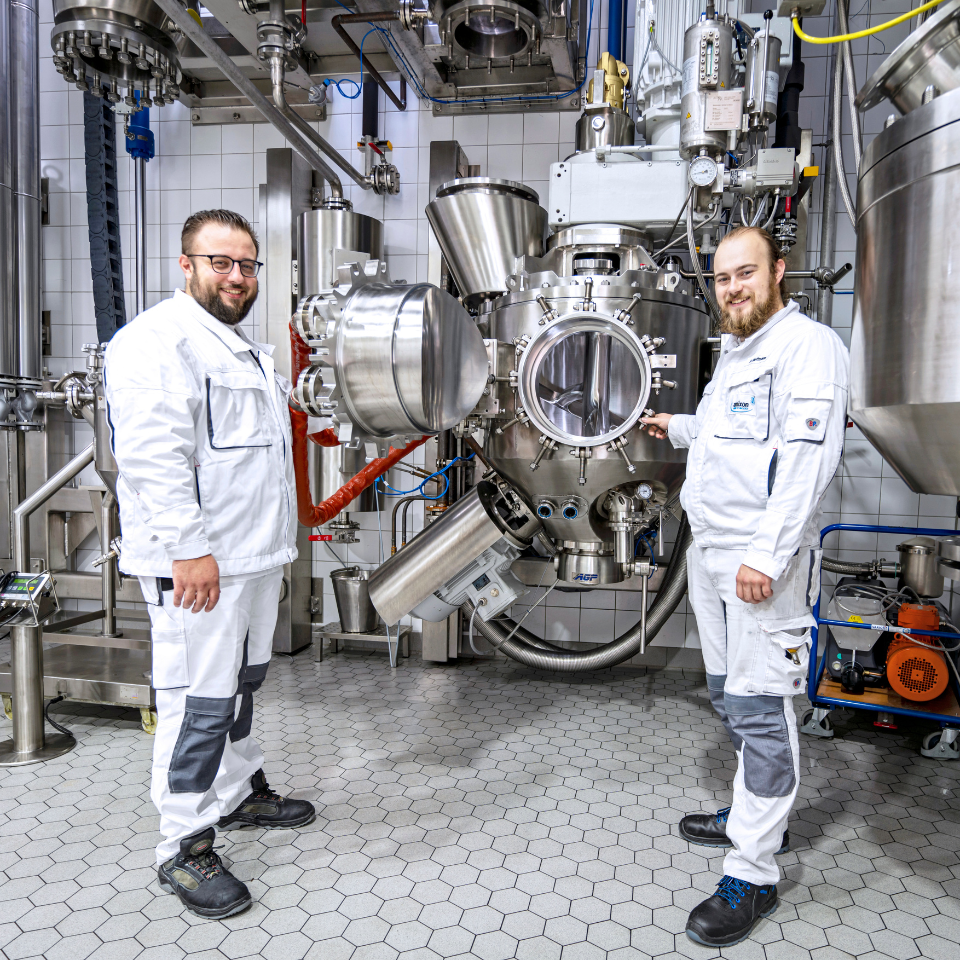
The AMT conical mixing dryer and reactor can be tested at the pilot plant
The amixon® AMT Cone Mixer-Dryer and Reactor is specifically designed for processes with high heat transfer requirements—such as the production of metal soaps like calcium, magnesium, or zinc stearate. Heated walls and mixing tools ensure uniform heat distribution throughout the entire product volume. The conical bottom facilitates complete product discharge, which simplifies product changeovers and cleaning.
In metal soap production, the AMT can combine synthesis, mixing, and drying. This allows complex process chains—from suspension through paste to the finished powder—to be carried out in a single unit without the need to transfer intermediate products.
The AMT conical mixing dryer and reactor can be tested at the pilot plant
The amixon® AMT Cone Mixer-Dryer and Reactor is specifically designed for processes with high heat transfer requirements—such as the production of metal soaps like calcium, magnesium, or zinc stearate. Heated walls and mixing tools ensure uniform heat distribution throughout the entire product volume. The conical bottom facilitates complete product discharge, which simplifies product changeovers and cleaning.
In metal soap production, the AMT can combine synthesis, mixing, and drying. This allows complex process chains—from suspension through paste to the finished powder—to be carried out in a single unit without the need to transfer intermediate products.
Safety and Cleaning Requirements
Fine, organic, and oleochemical powders—such as metal soaps—can pose a dust explosion hazard. For this reason, amixon® mixing systems for such applications are designed to meet relevant safety requirements and explosion protection standards. A sealed design, appropriate sealing concepts, and grounding are key elements in this regard.
The units are also designed to feature surfaces that are easy to clean and to ensure thorough residual discharge. This facilitates frequent product changes—such as between different detergent formulations or types of metal soaps—reduces the risk of cross-contamination, and contributes to stable, documentable production.
Fine, organic, and oleochemical powders—such as metal soaps—can pose a dust explosion hazard. For this reason, amixon® mixing systems for such applications are designed to meet relevant safety requirements and explosion protection standards. A sealed design, appropriate sealing concepts, and grounding are key elements in this regard.
The units are also designed to feature surfaces that are easy to clean and to ensure thorough residual discharge. This facilitates frequent product changes—such as between different detergent formulations or types of metal soaps—reduces the risk of cross-contamination, and contributes to stable, documentable production.
Technical Center: Testing Processes in a Real-World Setting
At the amixon® Technical Center, both detergent and metal soap processes can be tested using actual raw materials. Mixing quality, flow behavior, wetting, discharge, and cleanability are evaluated and optimized for industrial use. When mixing powders, associated effects such as deagglomeration, dust binding, dust generation, wetting, drying, or chemical reactions can be investigated.
These effects are specifically monitored during testing, and the process control is adjusted to leverage desired effects and minimize undesired ones. For example, the process can be configured to break up agglomerates without damaging sensitive components.
At the amixon® Technical Center, both detergent and metal soap processes can be tested using actual raw materials. Mixing quality, flow behavior, wetting, discharge, and cleanability are evaluated and optimized for industrial use. When mixing powders, associated effects such as deagglomeration, dust binding, dust generation, wetting, drying, or chemical reactions can be investigated.
These effects are specifically monitored during testing, and the process control is adjusted to leverage desired effects and minimize undesired ones. For example, the process can be configured to break up agglomerates without damaging sensitive components.
Frequently Asked Questions in Process Engineering
What batch sizes and throughputs can be achieved with amixon® mixers, and how does the process scale from the laboratory to the production scale?
amixon® designs vertical single-shaft mixers (VM), conical single-shaft mixers (AM), and continuous mixers according to individual formulation and capacity requirements; the scale-up parameters (fill level, speed, mixing time) can be determined in the pilot plant using actual raw materials and can be applied to larger machine sizes.
What heating and cooling capacity per kilogram of product can be provided in the AMT, and how is uniform temperature distribution ensured throughout the entire batch volume?
Heatable walls and mixing tools in the conical mixing dryer ensure uniform heat transfer, which is necessary for the synthesis reaction, drying, and mixing of metal soaps in a single unit.
Can the synthesis reaction, mixing, and drying actually be carried out in a single unit, or are additional process steps required?
Yes, in the amixon® conical mixing dryer and reactor (AMT), the synthesis reaction, drying, and mixing take place in the same apparatus without intermediate discharge; this requires only a design capable of withstanding pressure and temperature changes, as well as a dosing strategy tailored to the specific fatty acid.
Can mixing quality, flow behavior, and residual discharge be tested in advance at the pilot plant using my actual raw materials before an investment decision is made?
At the amixon® pilot plant, detergent and metal soap processes are tested using actual raw materials, allowing reliable design parameters for the production plant to be derived before any investment is made.
With its portfolio of equipment, amixon® covers the entire spectrum—from the homogenization of heterogeneous detergent powders to the synthesis of metal soaps. Learn more in our Fact Sheet.
What batch sizes and throughputs can be achieved with amixon® mixers, and how does the process scale from the laboratory to the production scale?
amixon® designs vertical single-shaft mixers (VM), conical single-shaft mixers (AM), and continuous mixers according to individual formulation and capacity requirements; the scale-up parameters (fill level, speed, mixing time) can be determined in the pilot plant using actual raw materials and can be applied to larger machine sizes.
What heating and cooling capacity per kilogram of product can be provided in the AMT, and how is uniform temperature distribution ensured throughout the entire batch volume?
Heatable walls and mixing tools in the conical mixing dryer ensure uniform heat transfer, which is necessary for the synthesis reaction, drying, and mixing of metal soaps in a single unit.
Can the synthesis reaction, mixing, and drying actually be carried out in a single unit, or are additional process steps required?
Yes, in the amixon® conical mixing dryer and reactor (AMT), the synthesis reaction, drying, and mixing take place in the same apparatus without intermediate discharge; this requires only a design capable of withstanding pressure and temperature changes, as well as a dosing strategy tailored to the specific fatty acid.
Can mixing quality, flow behavior, and residual discharge be tested in advance at the pilot plant using my actual raw materials before an investment decision is made?
At the amixon® pilot plant, detergent and metal soap processes are tested using actual raw materials, allowing reliable design parameters for the production plant to be derived before any investment is made.
With its portfolio of equipment, amixon® covers the entire spectrum—from the homogenization of heterogeneous detergent powders to the synthesis of metal soaps. Learn more in our Fact Sheet.
 Related News
© Copyright by amixon GmbH