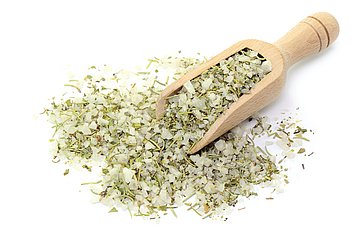


Sheathing
During encapsulation, particles, granulates, or products are provided with a coating layer. The coating layer encloses the core material completely or partially. The goal is to selectively modify the material properties. Coatings protect against moisture, oxygen, abrasion, or chemical reaction. They can also control the release of active ingredients. Coated particles are used in the chemical, food, pharmaceutical, battery, and detergent industries.
The coating layer can consist of polymers, waxes, fats, salts, or inorganic materials. Encapsulation can be carried out by spray coating, fluidized bed coating, melt coating, coacervation, or mechanical coating processes.
Encapsulation improves flowability, doseability, storage stability, and process reliability. It is an important step in material refinement and in the production of functional auxiliaries.
The proportion of the coating layer is often described by the mass fraction.
w(coat) = m(coat) / m(total)
- wcoat is the mass fraction of the coating
- mcoat is the mass of the coating layer
- mtotal is the total mass of the coated particle
The effectiveness of the encapsulation is described by the encapsulation efficiency.
ηenc = mactive,enc / mactive,total
- ηenc is the encapsulation efficiency
- mactive,enc is the encapsulated active ingredient mass
- mactive,total is the total active ingredient mass

 Blog
Blog