

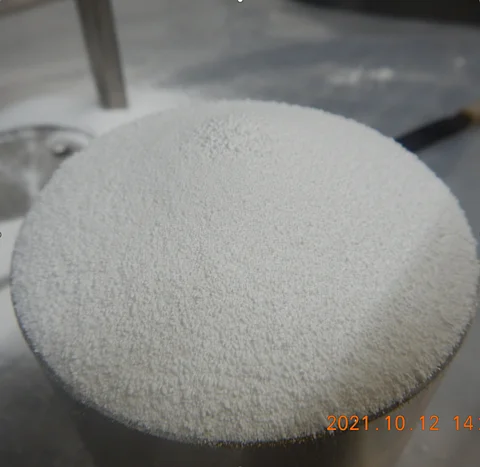
Bulk density
Bulk density describes the ratio of mass to volume of a bulk material. The volume includes the voids between the particles. It is therefore an apparent density of the particle aggregate. It differs from the true density of the solid material.
The unit is usually kg/m³. Bulk density depends on particle size, particle shape and particle size distribution. Surface properties and the state of compaction are also decisive factors. A distinction is made between loose bulk density, tamped density and vibrated density. These describe different states of packing.
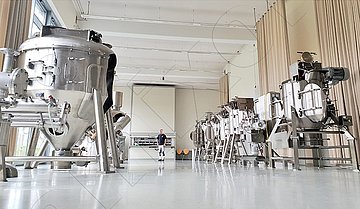
An amixon mixer can specifically influence the bulk density. To achieve this, the particles are either gently agitated or specifically compacted. In many applications, the bulk density is to be maintained. This is important, for example, in spray-dried instant products. This ensures that flowability and solubility remain constant.
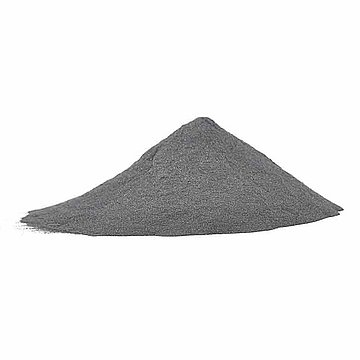
In other processes, however, an increase in bulk density is desired. In this case, the mixer promotes a denser packing of the particles. This can support subsequent sintering processes. A high bulk density improves component quality and process stability.
 Blog
Blog



 Related pages