
Viscosity
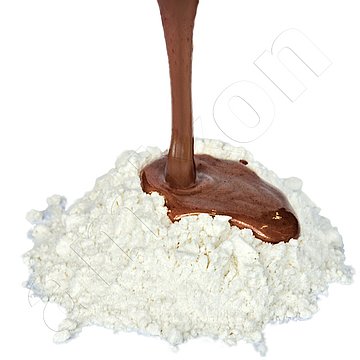
Viscosity is a measure of the internal frictional resistance of a fluid. It describes how strongly a fluid resists deformation or flow. Low-viscosity fluids flow easily; high-viscosity fluids flow sluggishly or like a paste.
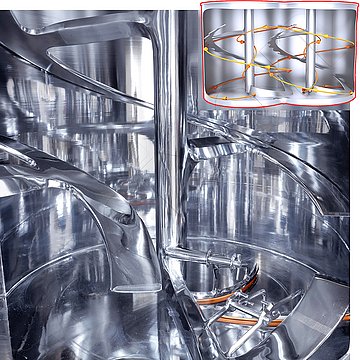
In process engineering, viscosity significantly influences flow and mixing behavior. It determines the energy demand for mixing, conveying, and pumping. Heat and mass transfer also strongly depend on viscosity.
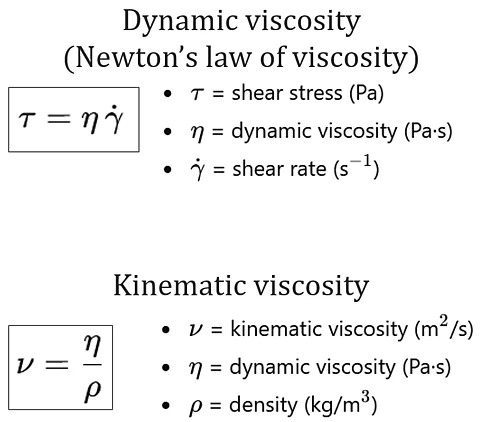
A distinction is made between dynamic and kinematic viscosity. Dynamic viscosity describes the shear stress as a function of the shear rate, whereas kinematic viscosity additionally takes the density of the fluid into account. Kinematic viscosity additionally takes the density of the fluid into account.
Many technical fluids do not exhibit a constant viscosity. They are structurally viscous, shear-thinning, or shear-thickening. In particular, suspensions, polymer solutions, starch and cellulose derivatives change their viscosity depending on shear, temperature, and time. Dynamic viscosity is described by the following equation:
τ = η * γ˙
- τ is the shear stress (Pa)
- η is the dynamic viscosity (Pa·s)
- γ˙ is the shear rate (1/s)
Kinematic viscosity is given by:
ν = η / ρ
- ν (nu) is the kinematic viscosity in m²/s
- η (eta) is the dynamic viscosity in Pa·s
- ρ (rho) is the density in kg/m³
Viscosity is a key parameter for the design of mixers, reactors, dryers, and conveying systems. Correct consideration is crucial for stable and reproducible processes.
 Blog
Blog