

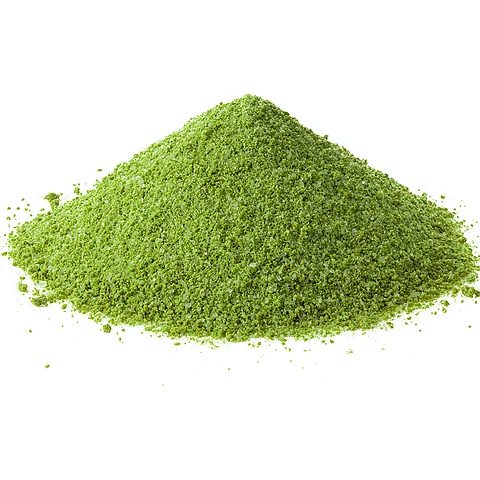
Powder processing
Powder processing is the collective term used in German for ‘Powder Processing’. It refers to the technical treatment of powders, which allows specific material and product properties to be tailored.
Powder processing encompasses all forms of powder formulation, refinement and modification. Physical, mechanical, thermal and chemical processes are employed in this context. The aim is to modify dispersed particle systems in a controlled manner and to manage them in a reproducible way. Powders are generally present as bulk materials. They have a heterogeneous structure and consist of particles of varying size, shape, density and composition. During powder processing, these heterogeneities are specifically influenced. The powder is homogenised and regarded as a functional whole.
Typical powder processing operations include mixing, homogenisation, agglomeration, deagglomeration, coating, wetting, drying, tempering and reaction. This also includes adjusting particle structure, packing density, flowability, dust behaviour and reactivity.
Powder processing can be carried out either discontinuously or continuously. In batch processes, a defined quantity of powder is treated. In continuous processes, by contrast, the powder is fed through the plant on a continuous basis. Depending on the product, throughput and quality requirements, both approaches are employed. In many applications, several process steps are combined during powder processing. In doing so, mechanical stress, heat transfer and mass transfer interact.