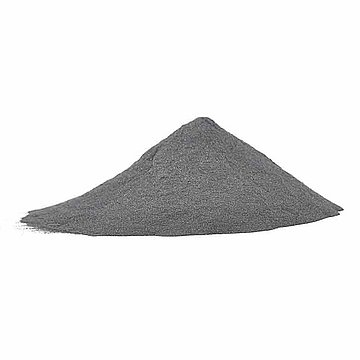


Particle shape
Particle shape describes the spatial shape of a particle, i.e. the ratio of length, width and height as well as the contour of its surface. It is determined by the type of crystallisation, the manufacturing process (atomisation, grinding, spray drying) and the subsequent agglomeration.
In bulk solids technology, a distinction is made between idealised shapes such as spheres, cubes, cylinders and platelets, and real, irregular or agglomerated particles. Qualitative classes (spherical, needle-shaped, platelet-shaped, dendritic) and quantitative shape factors such as
length-to-width ratio, roundness and sphericity are used for description. Particles that are almost spherical generally flow better, are less prone to bridging and achieve higher bulk densities than particles with sharp edges or flake shapes. Irregular, interlocking particles increase internal friction forces and flow poorly.
For applications such as additive manufacturing, coating or tableting, the aim is often to achieve as spherical a particle shape as possible in order to achieve reproducible packing density and dosing. In instant products, agglomerates are often porous and irregular. This improves wettability but makes mechanical stability and thus metrological measurement more difficult.
 Blog
Blog