
Heat transfer area
The heat transfer area denotes the surface over which thermal energy is transferred from one medium to another. It lies between a heating or cooling medium and the product to be temperature-controlled. The larger this area is, the higher the heat transfer rate can be at the same temperature difference.
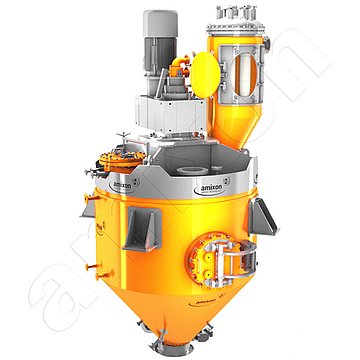
In process engineering, the heat transfer area is created, for example, by heated or cooled vessel walls, jackets, pipe coils, heating plates, or internal components. What matters is not only the geometric size, but also the area that is actually wetted and effectively swept by flow.
For bulk solids and pasty products, product contact plays a special role. Through movement, mixing, and flow, portions of the product repeatedly come into contact with the heat transfer area. Dead spaces or stagnant zones, on the other hand, significantly reduce the effective heat transfer area.
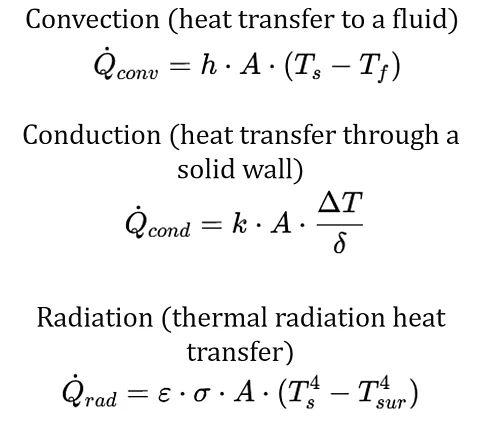
The heat transfer area directly factors into the design of heat transfer. The heat flow rate can be described in simplified form by the following equation:
Qdot = U * A * ΔT
- Qdot is the heat transfer rate (W)
- U is the overall heat transfer coefficient (W/(m²·K))
- A is the heat transfer area (m²)
- ΔT = driving temperature difference (K)
An adequately large and well-utilized heat transfer area is a prerequisite for short process times, uniform temperature control, and energy-efficient systems.
 Blog
Blog