

Heat exchange
The term ‘heat exchange’ is frequently used in technical contexts. However, the physically correct term is ‘heat transfer’. Heat is a form of energy that can only be transferred from a warmer system to a colder one. There is no mutual exchange in the strict sense of the word.
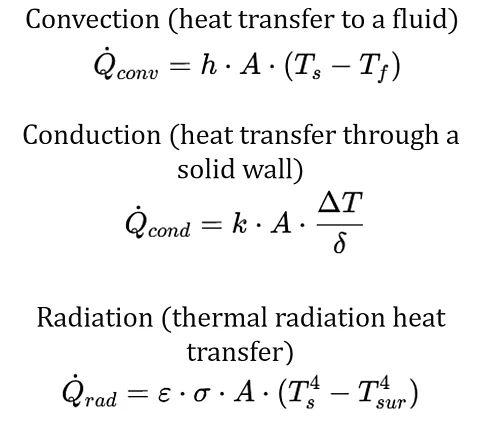
In process engineering, however, the term ‘heat exchange’ refers to the deliberate transfer of thermal energy between media at different temperatures. The aim is to supply or remove thermal energy in a controlled manner. This process is a fundamental operation in many technical processes. Heat transfer can occur via conduction, convection or radiation. In technical apparatus, these mechanisms often operate simultaneously. Heat transfer determines heating, cooling, drying and reaction processes. The heat flow can be described in simplified terms as follows:
Qdot= U *A * ΔT
- Qdot is the heat flux (W)
- U is the heat transfer coefficient (W/(m²·K))
- A is the heat transfer area (m²)
- ΔT is the driving temperature difference (K)
Efficient heat transfer requires good contact between the medium and the heat-transferring surface. In mixers, reactors and dryers, this contact is improved by the mixing motion of the product. Dead spaces or stagnant zones, on the other hand, significantly impair heat transfer.
 Blog
Blog