Heat transfer
In heat transfer, thermal energy is transferred from a warmer to a colder system as a result of a temperature difference. Since heat is a form of energy, it cannot be stored or exchanged, but only transferred. The commonly used term "heat exchange" is therefore colloquial but not physically correct.
In process engineering, heat transfer is a basic operation. It governs heating, cooling, drying, reaction, and temperature-control processes. Targeted heat transfer is a prerequisite for stable processes and reproducible product properties.
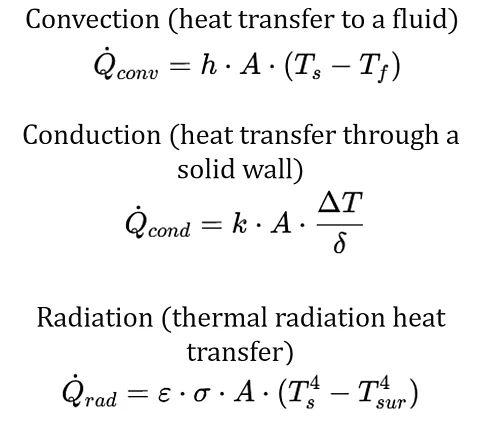
Heat transfer occurs via three fundamental mechanisms: conduction, convection, and thermal radiation. In technical equipment, these mechanisms often act simultaneously. The resulting heat transfer rate depends on the material properties, the flow conditions, the surfaces, and the temperature differences.
In mixers, reactors, and dryers, heat transfer is deliberately enhanced by the movement of the product. Good flow-through as well as intensive contact with heated or cooled surfaces increase heat transport. Dead spaces and stagnant zones, by contrast, significantly impair heat transfer.
The transferred heat rate can be described in simplified form by the following equation:
Q_(dot) = U * A * ΔT
- Qdot is the heat transfer rate (W)
- U is the overall heat transfer coefficient (W/(m²·K))
- A is the heat transfer area (m²)
- ΔT is the driving temperature difference (K)
Heat transfer is a central design criterion for equipment and plants in the chemical, food, pharmaceutical, and plastics industries.
 Blog
Blog