
Circumferential speed
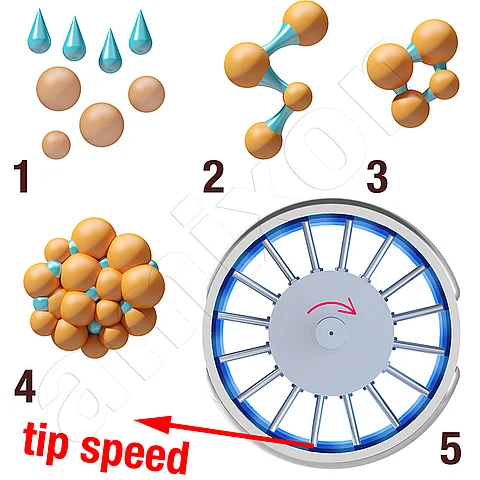
In English usage, peripheral speed is also called tip speed or circumferential speed. Peripheral speed describes the linear velocity of a point at the rotor circumference. It is important for shear forces, turbulence, and dust generation. It is calculated as
u = π⋅ d⋅ n
or in SI units
u = 2⋅ π⋅ r⋅ f
- u is the peripheral speed
- d is the rotor diameter
- r is the radius
- n is the rotational speed
- f is the rotational frequency.
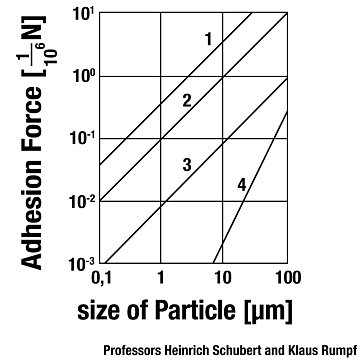
A high peripheral speed leads to more intensive deagglomeration. This can change the structure and granulometry of the powder. In the presence of binders, agglomeration can even occur. A low peripheral speed, on the other hand, results in gentle conveying, in which the structures of the powders are better preserved.
 FAQ - Circumferential speed
 Blog
Blog