
Additive manufacturing processes
In additive manufacturing processes, components are produced by applying material layer by layer. In contrast to subtractive (chip-removing) processes, the workpiece is not worked out from a blank, but generated additively based on digital data.
The basis of additive manufacturing processes is a three-dimensional CAD model. This is divided into thin layers. Depending on the process, the material is applied by melting, polymerizing, sintering, or bonding.
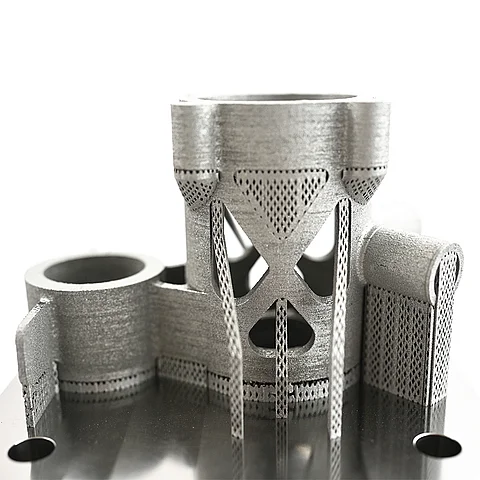
Additive manufacturing processes enable complex geometries that are difficult or impossible to realize with conventional manufacturing methods. These include, for example, internal channels, bionic structures, or functionally integrated components.
In mechanical engineering, additive manufacturing processes are increasingly used for prototypes, functional components, special tools, or flow elements. They allow short development times and a high degree of design freedom.
 FAQ - Additive manufacturing processes
 Blog
Blog